The Murder of Teresa Mae McAbee & the Conviction of James Aren Duckett
A document-by-document reconstruction of a 1987 child murder, the 38-year capital case it produced, and a close reading of the defendant's own account of that night — built from court opinions, filings, contemporaneous reporting, and archived case photographs.
Crime Rewind · Updated August 23, 2026
Duckett was executed by lethal injection at Florida State Prison on July 28, 2026 — three weeks before this document was compiled — as part of Florida's first double execution since 1964. He maintained his innocence without interruption for nearly 39 years and declined a final statement. Every primary document and photograph cited below was downloaded and is included in Section XI.

Background
Who Duckett was before May 11, 1987 — and the two other deaths investigators would later connect to him.
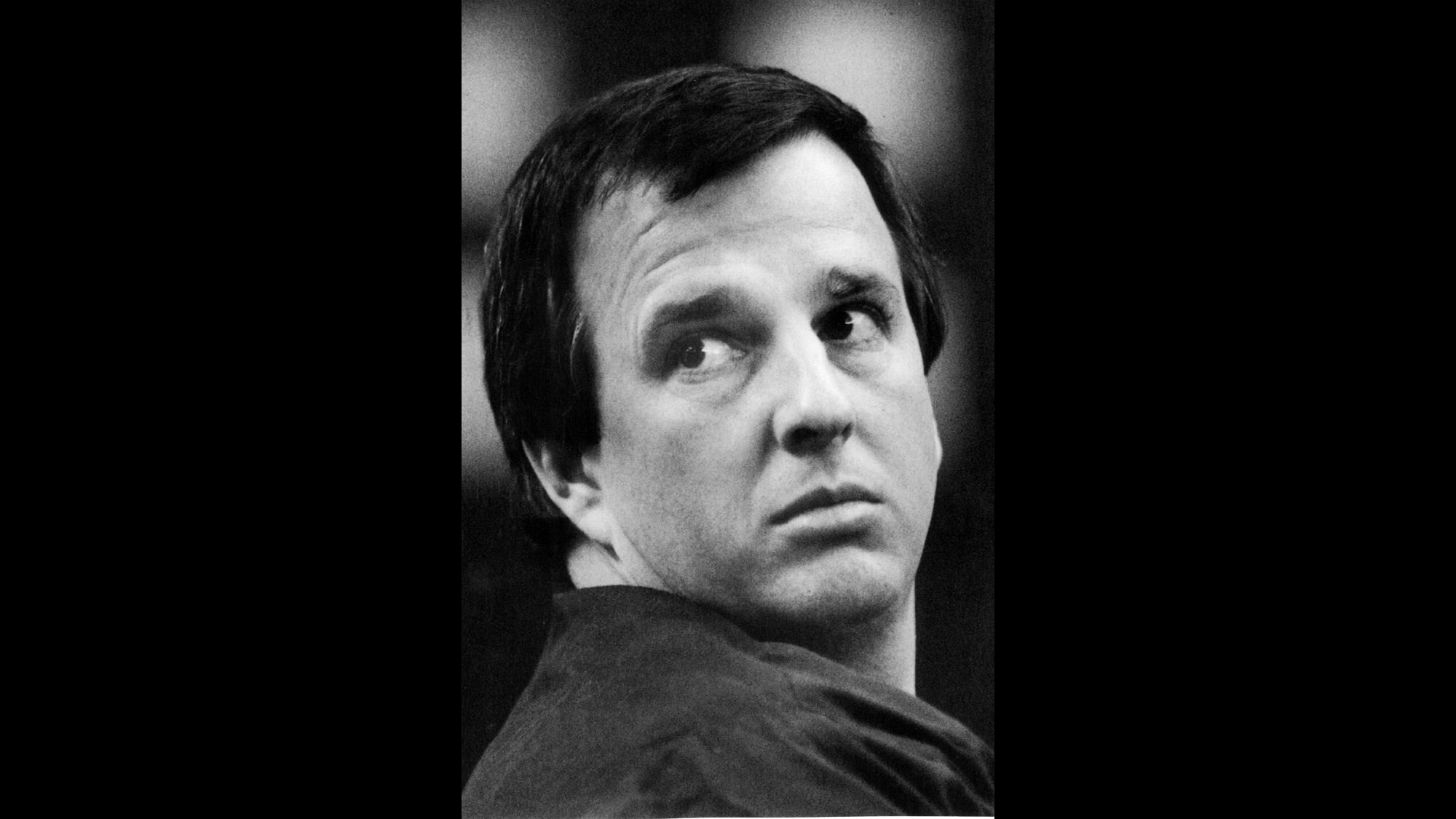
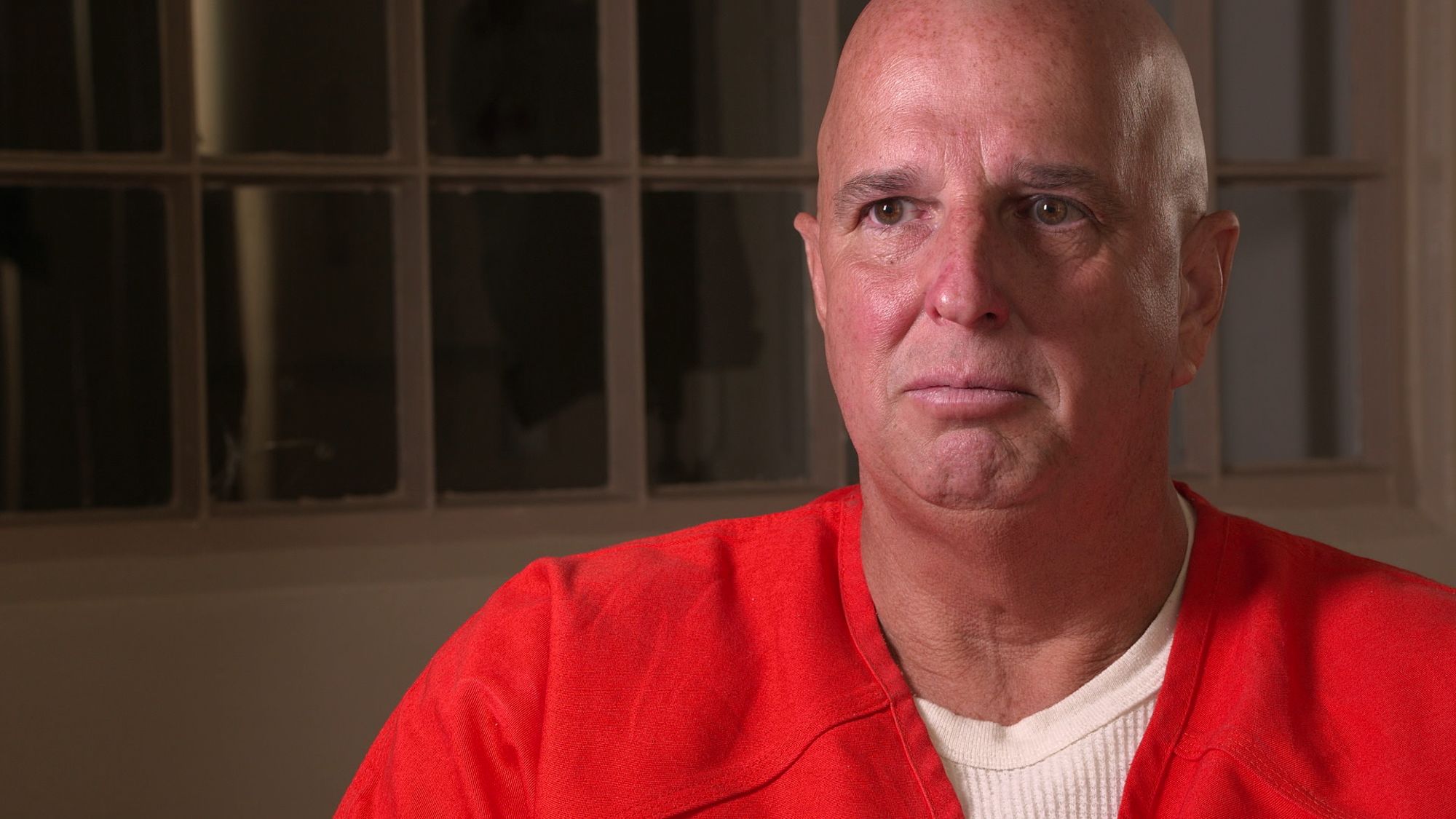
James Aren Duckett was born September 4, 1957, and by the spring of 1987 was a 29-year-old rookie patrolman on the five-person police force of Mascotte, a small city in Lake County, Florida. He had been on the job seven months. On the night of May 11, 1987, he was the only officer on patrol in Mascotte, working a shift that ran from 7:00 p.m. to 7:00 a.m. the following morning.
Two other deaths would later be tied to Duckett's name, one more strongly than the other:
Ronette Lynn Peterson (found May 7, 1986)
A young woman was found dead in a water-filled pit off Highway 33 near Lakeland, Florida, strangled, more than a year before McAbee's murder. She went unidentified for roughly nineteen years, as a Jane Doe, until a January 2005 fingerprint match — prompted by a missing-persons report her sister filed with the Boone County, Iowa Sheriff's Office — identified her as Ronette Lynn Peterson, 22, of Madrid, Iowa, who had left home in January 1986. Witnesses reported she was last seen getting into a dark blue car; Duckett owned a royal-blue Buick Regal at the time. No charges were ever filed, and neither the Polk County Sheriff's Office's own cold-case page nor its 2026 press conference on the Weldon case names Duckett in connection with this one; Sheriff Judd said in 2026 only that it remained “unclear if Duckett had any other victims” beyond McAbee and Weldon. As of 2026 the case remains formally unsolved.
Polk County Sheriff's Office, cold-case page “Ronette Peterson”; Iowa Department of Public Safety press release (Jan. 28, 2005); FOX 13 Tampa Bay (Jul. 30, 2026), quoting Sheriff JuddJeanifer Shyan Weldon (disappeared September 19, 1987)
Four months after McAbee's murder — while Duckett was fired from the police force but not yet tried — 14-year-old Jeanifer Weldon vanished walking home from a carnival, three days before her 15th birthday. Her body was found near Auburndale, Florida on October 2, 1987. Duckett, by then working night shifts at a phosphate mine, regularly drove through the area; his gas receipts placed him near the scene on the date of her disappearance, and he arrived to work two hours late that day, disheveled. Weldon had been carrying a green shopping bag and a stuffed toy, neither ever recovered with her body — and Duckett's wife told investigators he brought home a lime-green shopping bag with a stuffed toy for their children around that time, and later noticed scratch marks on his back that he attributed to crawling under barbed wire; per Sheriff Judd's 2026 account, Duckett then asked her to fabricate auto-repair receipts and have his car professionally cleaned, which she refused to do. In 2003, Polk County investigators said publicly they intended to charge Duckett with Weldon's murder as insurance against a successful appeal in the McAbee case. They never did — until two days after his execution (Section VII).
“Killer Seen as Suspect in Polk Girl's ’87 Death,” Orlando Sentinel (Jun. 26, 2003) — verbatim: “The date and time printed on a gas receipt puts Duckett in the area the same time the teen was said to have been there”; “Expert Changes Mind, Says Convict Is Guilty,” Lakeland Ledger (Jun. 23, 2003) — verbatim: “Gasoline receipts placed Duckett close by. The night of the murder, he arrived at work disheveled and two hours late”; FOX 13 Tampa Bay (Jul. 30, 2026) — verbatim: “he later asked his wife to fabricate auto repair receipts and professionally clean his car, which she refused to do”The Night of May 11–12, 1987
Reconstructed from the Florida Supreme Court's 1990 statement of facts and contemporaneous witness accounts.
Teresa walks to the convenience store
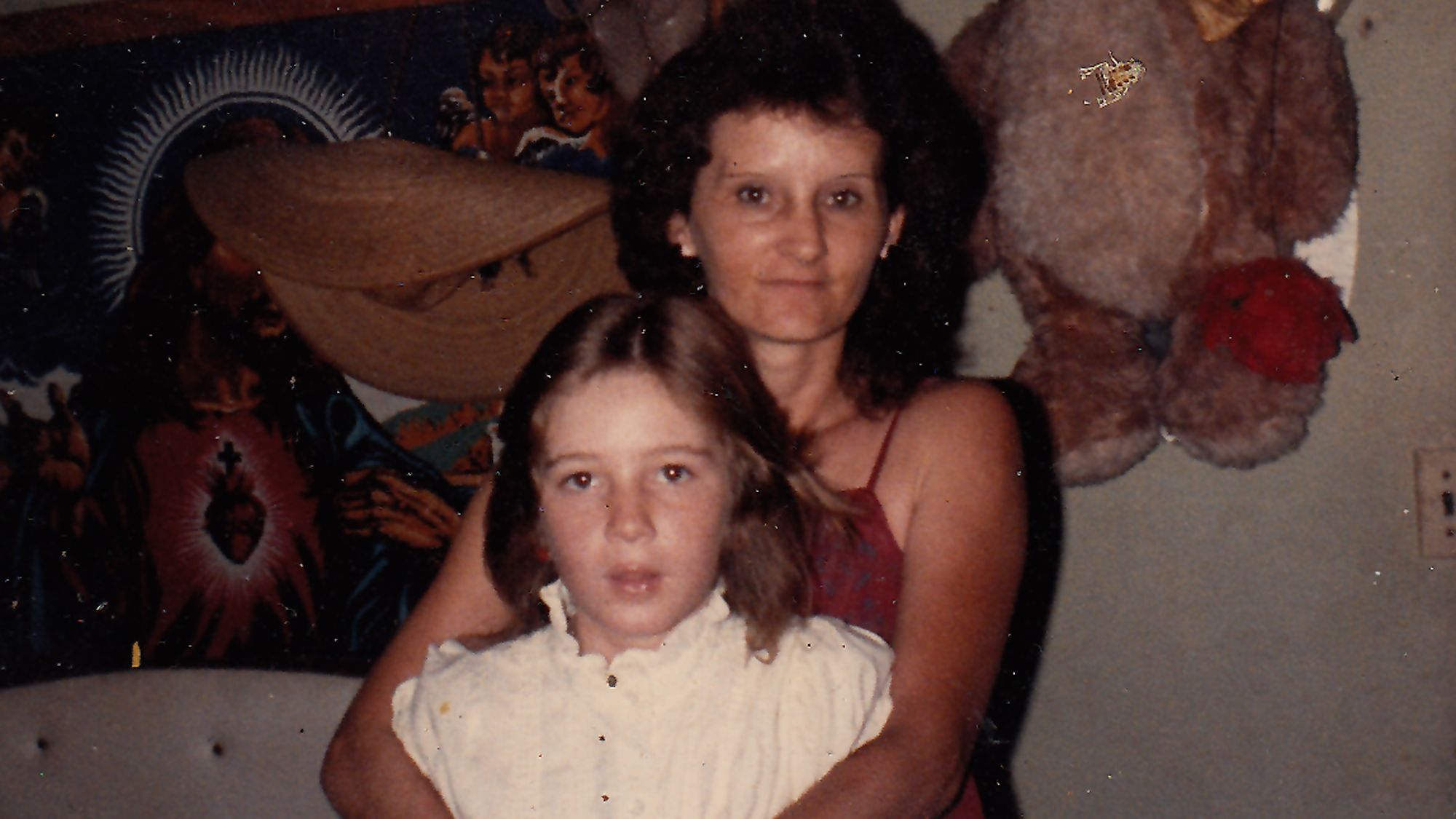
Eleven-year-old Teresa Mae McAbee walked a short distance from her home to a nearby Circle K convenience store to buy a pencil. There she encountered a 16-year-old boy who was doing laundry at an adjoining laundromat. The two left the store together and walked to the store's dumpster area, where they talked for roughly twenty minutes.
Duckett v. State, 568 So. 2d 891 (Fla. 1990) — statement of factsDuckett approaches the pair
By his own trial testimony, Duckett was running stationary radar on Highway 50 across from the store when he noticed the two. Mascotte had a curfew, and he crossed the street to check on them. He first asked the store clerk about Teresa's age before approaching the two directly and asking them to walk to his car; there, Teresa said she was 11 and the boy — identified in postconviction filings as Salvador Calisto — said he was 16.
Duckett v. State, 568 So. 2d 891 (Fla. 1990); Duckett's Amended Initial Brief, No. SC01-2149 (2002), citing trial record at R. 557–58, 613, 1682–84She is placed in the patrol car — what happened next is the whole case
The boy went to wait for his uncle, Maximinio Rubio, at the adjoining laundromat. When Rubio arrived, Duckett asked him his nephew's age, then suggested Rubio speak with the boy while Duckett spoke with Teresa. According to both the boy and Rubio — and this part is not disputed by Duckett himself — Duckett placed Teresa in the passenger seat of his patrol car and shut the door before walking to the driver's side. Rubio specifically testified he never saw Teresa touch the hood of the car. Rubio and the boy then gathered their laundry and left; their sworn account does not describe what happened after that.
Duckett's own version, consistent from his June 15, 1987 statement through his trial testimony, picks up from there: he says he asked Teresa to sit in the car only so he could finish speaking with her privately, told her she needed to go home, made a note in his patrol notebook of her age and clothing, and that she then got out of the car and walked off toward her home, in front of the store — a walk of less than 400 feet. (In earlier statements, per the State's Answer Brief, he had separately said he “took her from behind the dumpster” — describing where she was before being placed in the car, not after leaving it; the two locations should not be conflated.) He says he never saw her again. Whether that is true, or whether he instead drove off with her still in the car, is the entire question this case turns on.
Duckett v. State, 568 So. 2d 891, 7 (Fla. 1990) — “He did not see her again after she got out of the car and walked in front of the store”; State's Answer Brief, No. 72,711 (1990), at 14–15 (R 1687, 1722); Amended Initial Brief, No. SC01-2149 (2002), at 5–6Three different accounts of what happened next
The state's theory, resting on the trial testimony of Grace Gwendolyn “Gwen” Gurley, was that Duckett drove off alone, circled the block, and returned to pick Teresa up a second time by the store's dumpster — the version the prosecution argued at trial. Gurley testified she watched from hiding and saw the patrol car back up and drive away with “the big man” and “a small person” inside.
Independently, Shirley Williams, the Circle K clerk, testified Duckett was driving off alone when she arrived at the store between 10:30 and 10:40 p.m. — consistent with Duckett's account, not Gurley's. Two further witnesses, raised in Duckett's 2002 postconviction filings, went further still: Kim Vargas, a customer, gave sworn statements that she saw Teresa exit Duckett's car and walk alone toward the dumpster; and Richard Reynolds, a patron at the laundromat, told investigators he then watched Teresa get into a different car — a blue hatchback driven by a man with black hair — and drive off down Sunset Avenue. Both were known to the state before trial; neither testified. Vargas was subpoenaed by the prosecution, drove from California, and was never called. Reynolds's name was given to the defense five days before trial and he reportedly changed his account when he reached the courthouse.
The radio-log gap
Every Florida Supreme Court opinion to recite the facts of this case, from 1990 forward, notes the same detail from Duckett's own patrol radio tape: “A tape of Duckett's radio calls indicated none between 10:50 p.m. and 12:10 a.m.” A convenience-store clerk on his usual patrol route separately testified he normally passed by every forty-five minutes to an hour, but that after passing at 9:30 p.m. he did not return until much later that night. This roughly ninety-minute silence — encompassing the window in which Teresa disappeared — is one of the six facts the Florida Supreme Court has repeatedly cited as supporting the conviction.
Duckett v. State, 568 So. 2d 891, 894 (Fla. 1990); Duckett v. State, 918 So. 2d 224, 227 (Fla. 2005) (quoting verbatim)While Teresa's mother searched, no one saw Duckett's patrol car
The state's own appellate brief laid out, in detail, what did not happen that night. Teresa's mother drove around searching for her for nearly an hour and never once saw a police car, and ultimately had to drive to the next town, Groveland, to report her missing — where police radioed Duckett and, per the state's own account, waited fourteen seconds for him to respond. A Groveland deputy who separately needed to reach him that night also had to wait for him to arrive back in Mascotte. Duckett failed to log his mileage at the end of his shift. Hours later, specifically asked by Teresa's aunt whether he had checked the lake near the pump house — a location he had been to before, close to the store where Teresa was last seen — he never drove back to look; the aunt eventually walked down and checked it herself. He never followed up with the mother again after 3:00 a.m. to see whether Teresa had turned up; instead, he ran stationary radar and wrote parking tickets.
State's Answer Brief, No. 72,711 (1990), at 20–22A fisherman finds her body
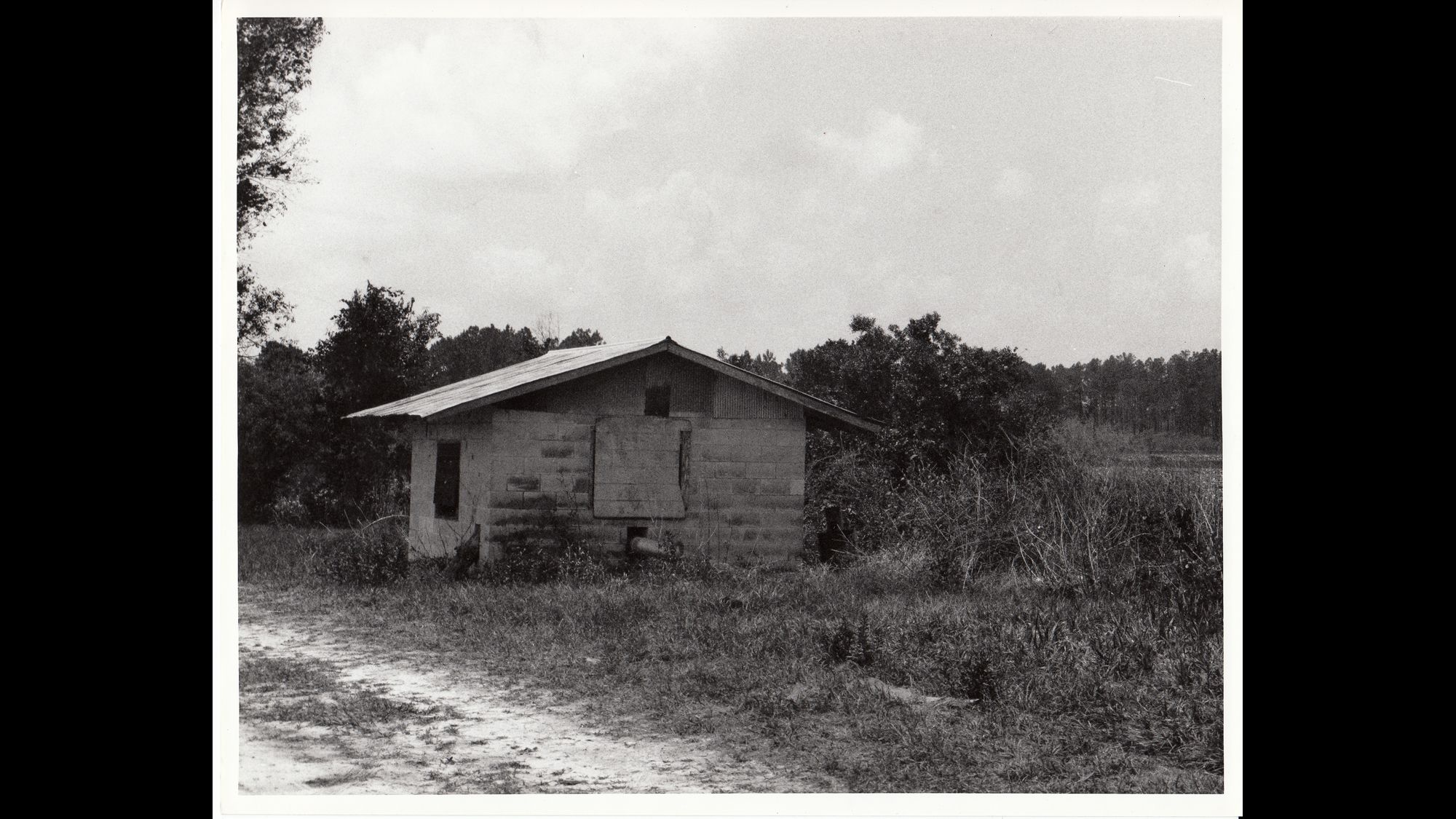
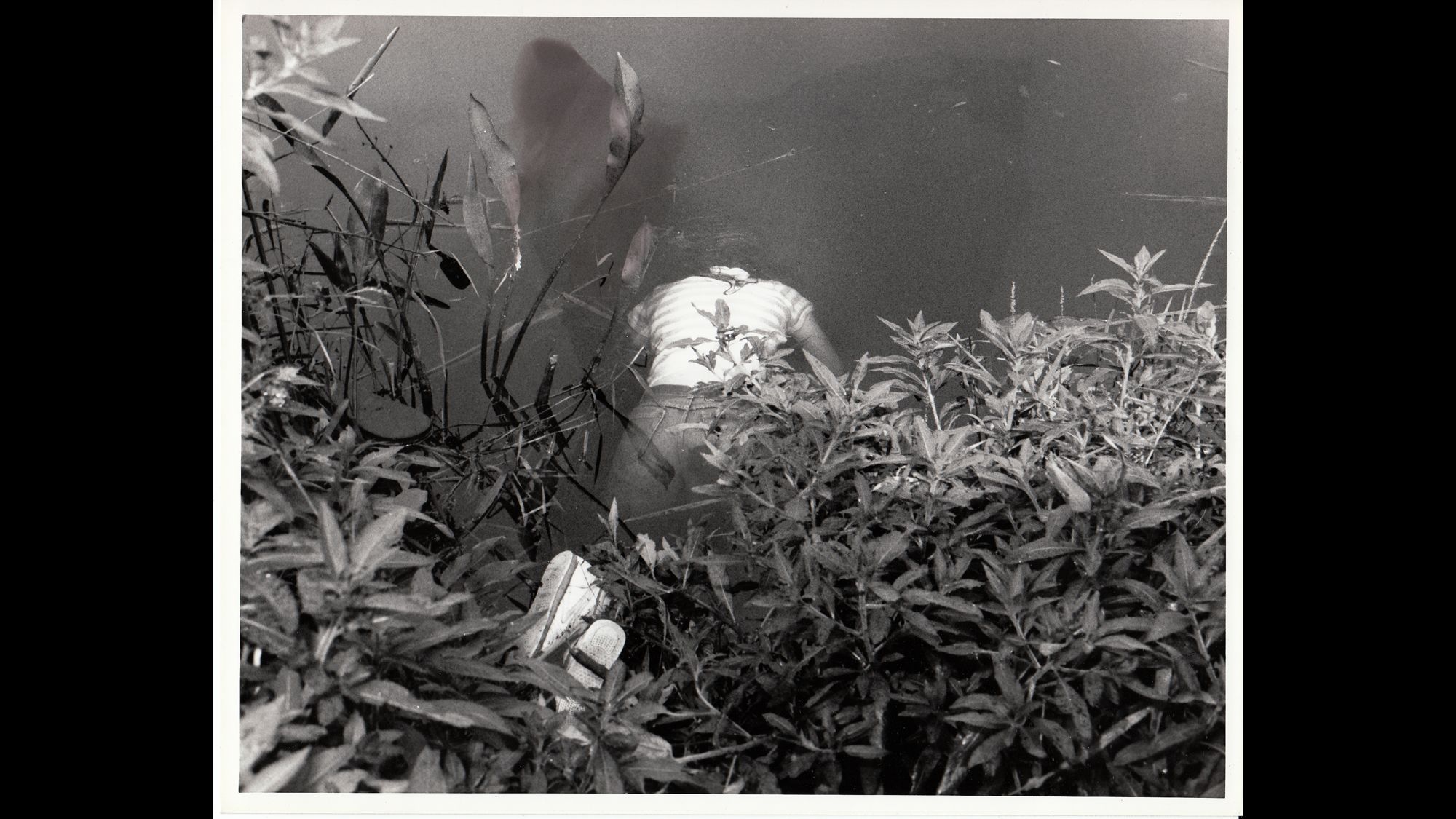
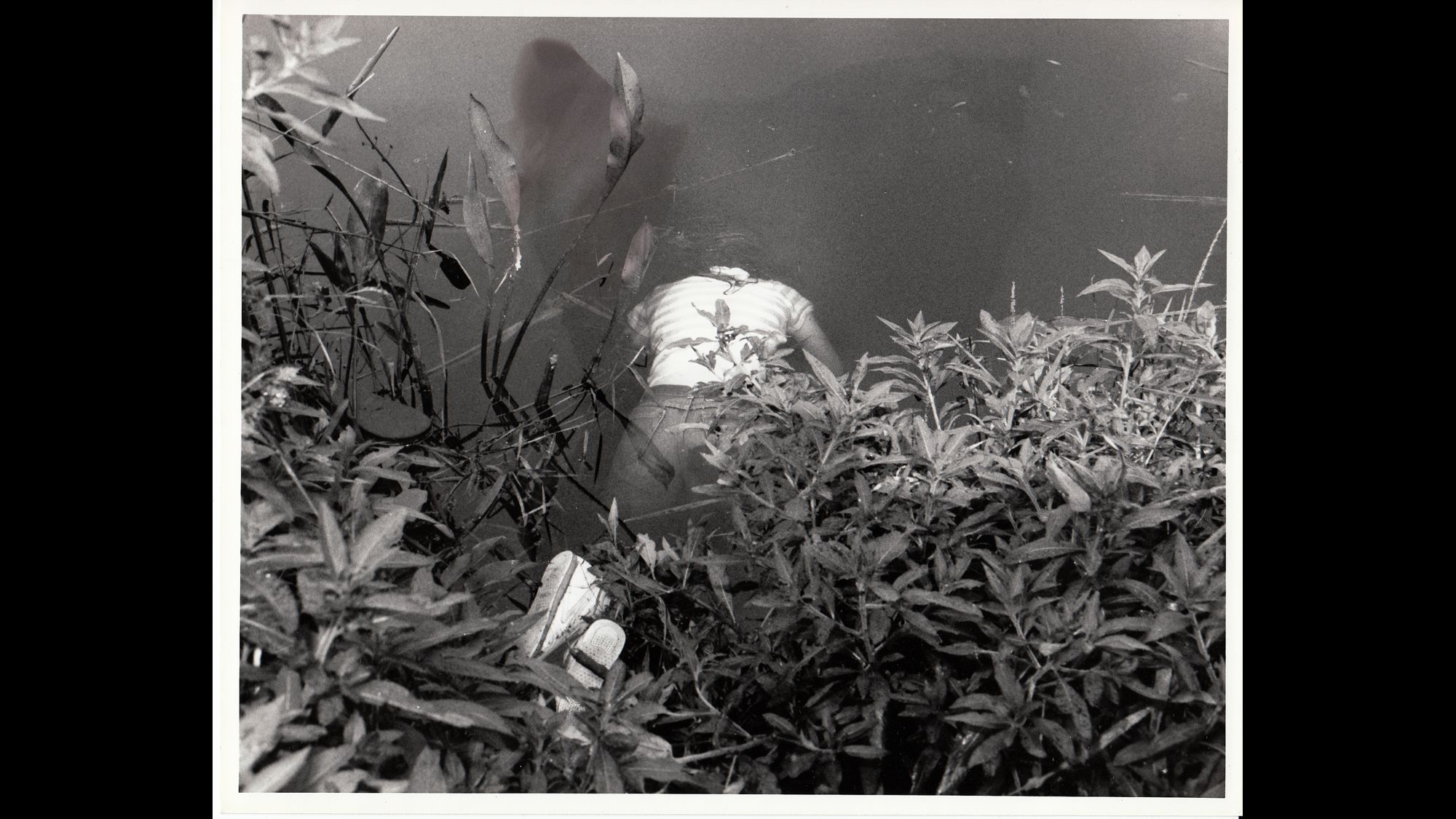
Jim Clark, fishing in a small lake in the orange groves roughly 3,200 feet behind the Circle K, per the State's own Answer Brief (a 2003 news account instead puts it at roughly 2,000 feet — see the discrepancy noted in Section IX) — reached by a dirt road that curved past an abandoned pump house — noticed what he believed to be a body at the water's edge and found Mascotte Police Chief Michael Brady, who confirmed it was Teresa. A medical examiner testified she had been sexually assaulted while alive, then strangled and drowned, and that she had not been sexually active before that night.
Duckett v. State, 568 So. 2d 891 (Fla. 1990); State's Answer Brief, No. 72,711 (1990), at 6 (R 897, “approximately 3200 feet”); Amended Initial Brief, No. SC01-2149 (2002), at 8
Duckett's full documented timeline, minute by minute
Everything below traces to a specific record page, drawn mainly from the fact section of the State's 1990 Answer Brief — a more granular, contemporaneously record-cited account than the appellate opinions' own summaries. Rows marked Disputed rest on Duckett's own account or his notebook, uncorroborated by any witness or by the radio log; everything else was undisputed at trial or on appeal.
| Time | Event | Record |
|---|---|---|
| ~10:00–10:30 p.m. | Teresa leaves home, walks roughly 400 feet to the Circle K for a pencil. | R. 513, 896 |
| — | Salvador first spots Duckett's patrol car parked on the corner; Duckett drives past the store twice over five to ten minutes before pulling in and parking. | R. 610–12 |
| — | Duckett enters the store, asks the clerk the girl's name and age; told “Teresa,” “ten to thirteen.” He leaves and walks toward the dumpster. | R. 557–58, 570 |
| — | Duckett asks Salvador's age (16) and hears Teresa's (11) directly from her; tells Salvador he's too old to be talking to a girl that young at that hour. | R. 613 |
| — | Salvador tells Teresa to go home; Duckett says he needs to speak with her; all three walk to the patrol car. | R. 613 |
| 10:45 p.m. | The clerk sees the three walk back past the store window — time-stamped by a video-rental receipt she wrote for other customers moments later. | R. 559, 562 |
| — | Salvador goes to wait for his uncle, Maximinio Rubio, at the laundromat. Rubio arrives and parks beside the patrol car; Duckett asks Teresa's and Salvador's ages again, through Rubio. | R. 614, 635–38 |
| — | Duckett tells Rubio to talk to Salvador; says he'll speak with Teresa; puts her in the passenger seat, shuts the door, and walks to the driver's side. Neither Rubio nor Salvador sees her touch the hood. | R. 616–17, 638–40 |
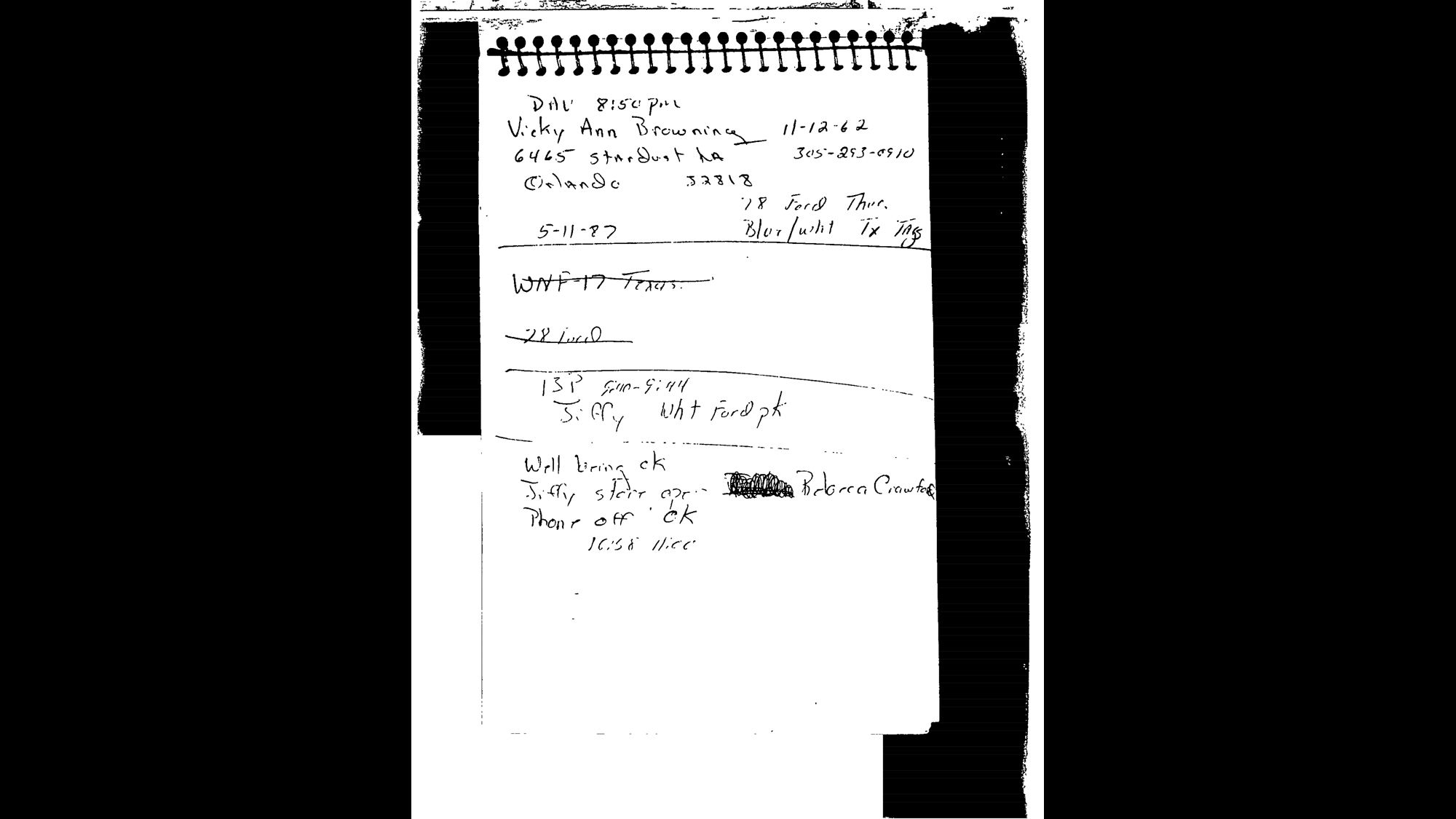
| Disputed, ~10:58–11:00 p.m. | Duckett's own claim (from his patrol notebook): a stop at the “Jiffy Store” for coffee. Not corroborated by any witness or by the radio log; his trial attorney testified he had never seen the notebook before trial. | Notebook; 2002 Brief at 6–7 |
| Disputed, ~11:05–11:15 p.m. | Duckett's own claim: back at the Circle K to retrieve a coffee cup he'd left. Shirley Williams corroborated this only at a 1997 evidentiary hearing — not at the 1988 trial. | Williams, 1997 hrg. |
| ~11:00 p.m. | Teresa's mother, Dorothy McAbee, walks to the Circle K looking for her; a clerk (Joyce Reitz, per the trial record) tells her to try the police station. | R. 513, 561 |
| ~11:00 p.m.–midnight | The mother and her sister drive around Mascotte for about an hour looking for Teresa — they see no police car anywhere. They find the Mascotte station empty and drive 1.5 miles to the Groveland Police Department. | R. 514–15, 593 |
| 10:50 p.m.–12:10 a.m. | No calls logged on Duckett's patrol radio — the undisputed gap cited in every appellate opinion. | R. 1830 |
| ~Midnight | The mother reports Teresa missing to Officer Don Campbell at the Groveland Police Department. Campbell radios Duckett, who takes fourteen seconds to respond and agrees to meet her back at the Mascotte station. | R. 589–90, 1956 |
| — | The mother drives back to Mascotte and waits 15–20 minutes; Duckett arrives from the east. He tells her he spoke with Teresa at the store, had her in his patrol car, and sent her home. She files a missing-person report and goes home. | R. 518–20, 535 |
| 15–20 min. later | Duckett goes to the mother's house to get a photo of Teresa — the first of two visits there that night. | R. 535 |
| Shortly after 1:00 a.m. | Duckett calls Police Chief Michael Brady to report the missing-person case; says he's already made a flyer and doesn't need help. Brady tells him to keep searching the rest of his shift. | R. 741 |
| ~1:00–1:15 a.m. | Duckett goes to Rubio's house to ask about Salvador and Teresa; Rubio offers to let him search the house himself. He doesn't, and leaves. | R. 641–42 |
| Time uncertain, after 1 a.m. | Duckett returns to the Circle K with the flyer; tells the clerk to leave it on the counter rather than post it, since it's “not a very good picture.” He also drops flyers at the Presto and Jiffy stores. | R. 673, 678, 721–22 |
| ~3:00 a.m. | Duckett's only other visit to the mother's house that night; he speaks with her and her sister. | R. 544 |
| After 3:00 a.m. | Per the state's own brief, Duckett never checks back with the mother again. | Answer Br. at 21 |
| ~5:40 a.m. | Duckett issues several speeding tickets — the only other documented action of his entire shift. | R. 708–9, 711–12 |
| End of shift | Duckett fails to log his ending mileage. | R. 763 |
| ~6:00–6:30 a.m. | Teresa's aunt — the mother's sister — walks down to the lake herself, looking for Teresa, after Duckett never did. | R. 1080 |
| After 7:30 a.m. | Jim Clark drops his children at school (7:15–7:30 a.m.), fishes three other spots, then goes to the pump house and finds the body. He gave no specific discovery time at trial. | R. 728 |
| 9:03 or 9:40 a.m. (disputed within the record itself) | The Lake County Sheriff's Office's own investigative report contradicts itself: it states Clark first observed the body at 9:40 a.m., but elsewhere states Chief Brady radioed LCSO about the body at 0903 hours — 37 minutes before the report's own stated discovery time. | LCSO Report, cited in 2002 Brief at 72–73 n.55 |
| 11:10 a.m. | Teresa's mother — next of kin — is notified, roughly two hours after the body was found by any account. | 2002 Brief at 72–73 n.55 |
Two things worth flagging about this record: the clerk who spoke with the mother around 11 p.m. (Joyce Reitz, per this brief) is named separately from Shirley Williams, who testified elsewhere about the disputed 10:58–11:15 p.m. window — plausibly two clerks on the same shift, not a contradiction, but not independently confirmed either. And the ticket detail is internally inconsistent within the same brief: this fact section calls them “speeding” tickets with a specific record cite; the brief's own later argument section calls the same event “parking” tickets without one.
State's Answer Brief, No. 72,711 (1990), Statement of the Case and Facts, at 1–3, 21; Amended Initial Brief, No. SC01-2149 (2002), at 72–73 n.55, 85 (discovery-time inconsistency; Jiffy Store/coffee-cup corroboration)Investigation & Physical Evidence
What detectives collected — and the statement Duckett gave before he was ever arrested.
Duckett's pre-arrest statement
On June 15, 1987, before his arrest, Duckett gave investigators a formal statement. He specifically denied driving his patrol car to the lake that evening, and specifically, flatly denied that Teresa had ever been on the hood of his patrol car at all — an unqualified denial, not a hedge. (The softer account first appears over a year later, in his 1988 trial testimony, and it is more specific than a simple hedge: he testified Teresa might have climbed onto the still-hot hood herself and jumped back down while he was occupied talking to Rubio and the others — a theory he said he had “thought about... for one year,” raised only after he had heard fingerprint examiner Jennie Ahern testify to the print pattern on the hood. Confronted on cross-examination with his own prior, unqualified statement to investigators — “I swear to God she has never been on the hood of my car” — and then, one by one, with four scene witnesses who had each testified no one saw her on the hood that night (Salvador Calisto, Maximinio Rubio, Circle K clerk Joyce Reynolds Reitz, and Polly Carr), he maintained the explanation anyway. See Section III and the Close Reading in Section X.) He said that after Teresa left, he stopped at a second convenience store, the “Jiffy Store,” for coffee. His own patrol notebook, entered into the postconviction record, appears to log that stop at 10:58 p.m. A separate entry logs his return, with a time of “11:00.” At a 1997 evidentiary hearing, Circle K clerk Shirley Williams testified — consistent with this — that Duckett came back into the Circle K between 11:05 and 11:15 p.m. to retrieve a coffee cup he'd left behind, a detail his trial attorney never presented to the jury because, he testified, he had never seen the notebook before trial.
Suspended, then fired
Duckett was named a suspect — he was the last person seen with Teresa and the only officer on duty that night. He was suspended June 16 and fired three days later, ending a seven-month career in law enforcement.
Wikipedia, “James Aren Duckett,” citing contemporaneous Florida press

Four pieces of physical evidence emerge
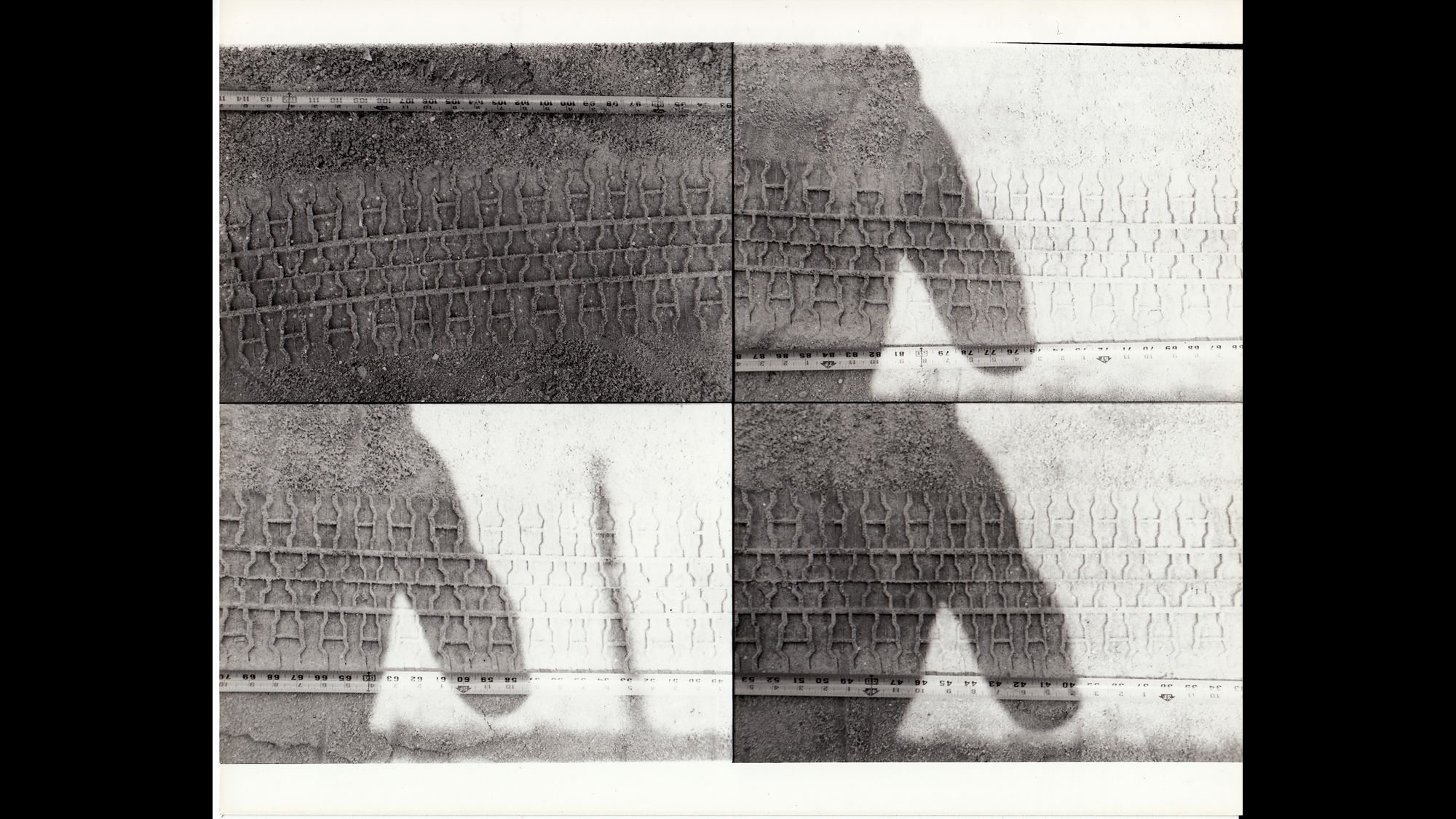
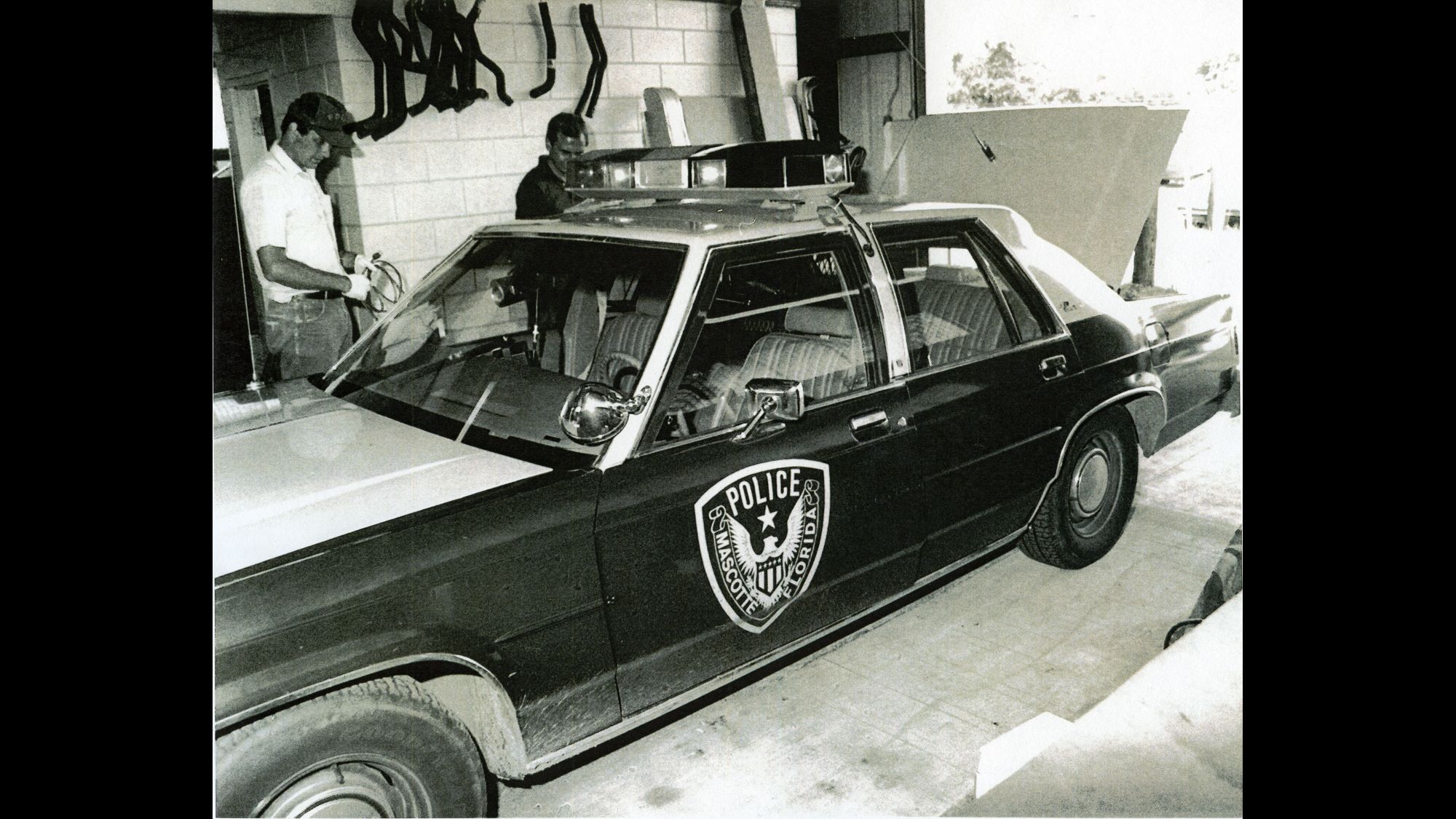
Tire tracks: A sheriff's department technician examining tracks along the dirt road near the lake found them distinctive; he traced the pattern to Goodyear Eagle mud-and-snow tires — a winter tread “designed for northern driving,” conspicuously out of place in Florida. The local tire center had never sold that particular tire in nine years of business; it had received two sets by mistake and mounted them on the department's only two patrol cars, one of them Duckett's.
Fingerprints/palm prints: Duckett's and Teresa's prints were found commingled on the hood of his patrol car, in a pattern experts said was consistent with a person sitting on the hood facing backward and scooting toward the windshield — directly at odds with his denial that she was ever on the hood at all.
Pubic hair: A pubic hair recovered from the victim's underwear was examined by FBI hair-and-fiber analyst Michael Malone, who testified there was a “high degree of probability” it was Duckett's, and that it was inconsistent with everyone else known to have been near Teresa that night. (This piece of evidence would become the most contested in the entire case — see Section VIII.)
Bruising: the medical examiner found bruising on Teresa's arms consistent with her having been held down during the sexual battery. The state's brief cited this for a narrower point than it is sometimes given credit for: Duckett had argued only one of his own fingerprints was found on the hood, and the state's primary response was simply that more than one of his prints had in fact been lifted. The bruising point was offered separately, to explain why the victim — who in fact left more prints than Duckett (eighteen matched prints, against roughly six of his) — did not leave still more: her arms were restrained rather than free to move.
Duckett v. State, 568 So. 2d 891, 895 (Fla. 1990); Duckett v. State, 918 So. 2d 224 (Fla. 2005); State's Answer Brief, No. 72,711 (1990), at 24; CNN “Death Row Stories” gallery (2014)The hair evidence's disputed handling
Florida's own crime lab (FDLE), examiner Deborah Steger, tested the hair first and could not reach a match either way. The state then sent the sample to the FBI, where Malone did reach a match. Steger did not appear at trial as a prosecution witness making that concession; she was called by the defense, specifically to undercut Malone. Confronted on cross-examination with Malone's own quoted trial language, she testified no hair in her samples was “completely indistinguishable” from Duckett's, while allowing that a handful of the roughly thirty known Duckett hairs she compared fell into a closer — though still not matching — population than the rest. Duckett's postconviction counsel called the state's move from FDLE to the FBI “expert shopping” and argued it violated the FBI's own internal policy against re-testing evidence another agency had already examined without supervisory review — a claim the Florida Supreme Court held in 2005 was procedurally barred (it should have been raised on direct appeal in 1990) rather than evaluated on its merits.
Separately, a second, unidentified hair recovered from the victim was examined by both the FBI and FDLE and found to be inconsistent with Duckett's known hair — and was never mentioned to the jury. That hair later went missing from evidence entirely; no explanation for its disappearance appears in the chain-of-custody paperwork. An independent DNA lab, Lifecodes, separately misplaced known hair standards for two years before finding them during an evidence-room cleanup, and its own written report initially misidentified which exhibit numbers had and had not been tested. When Duckett raised the missing second hair as a Brady violation in 2002, the Florida Supreme Court denied the claim as “insufficiently pled” — again a pleading ruling, not a finding that the hair's disappearance was adequately explained.
Amended Initial Brief, No. SC01-2149 (2002), at 39–50; Duckett v. State, 918 So. 2d 224, 232–33 (Fla. 2005); Trial Transcript, Vol. IX, at 1600, 1615–23 (Steger testimony)Duckett is fingerprinted as a suspect
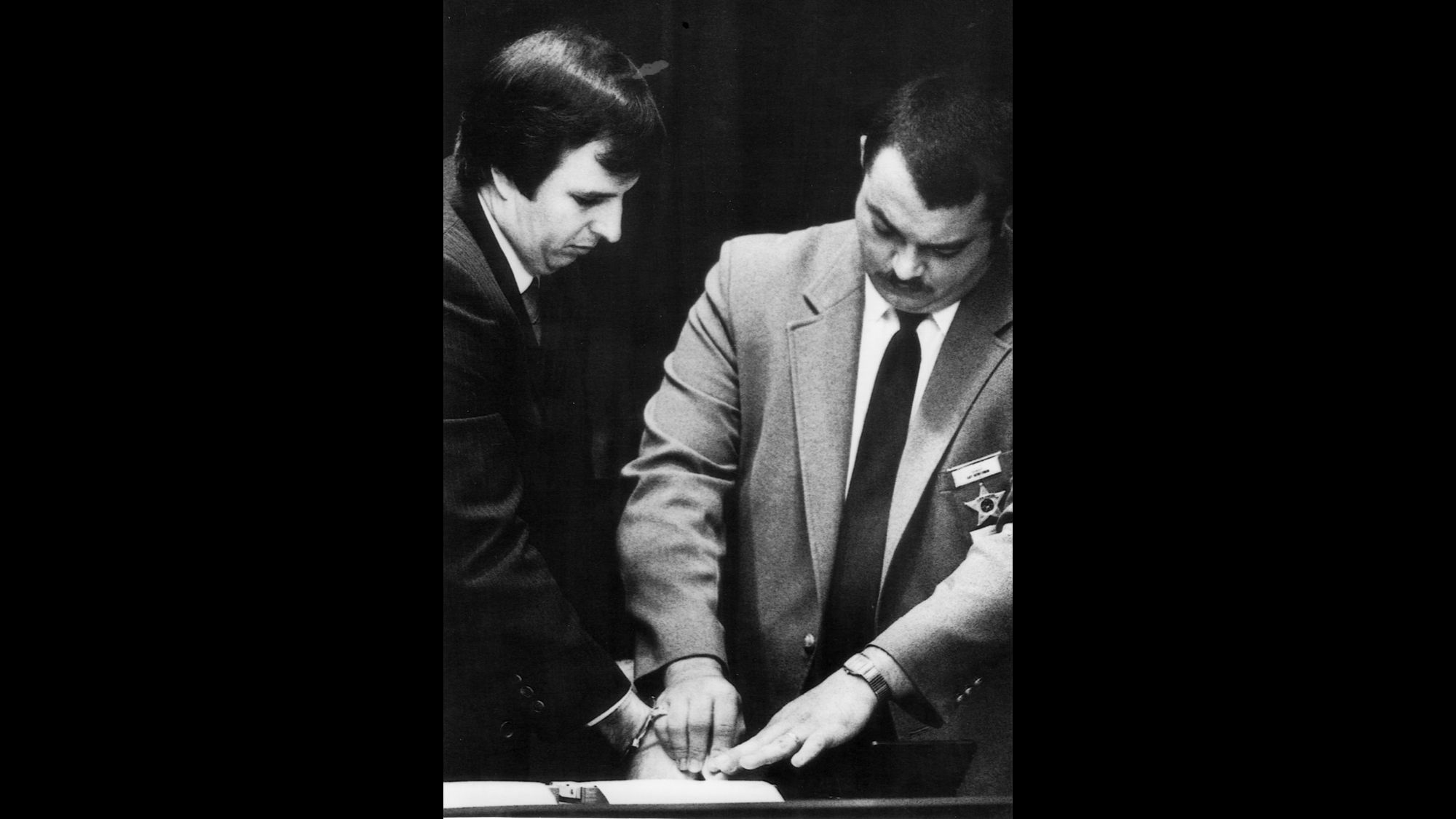
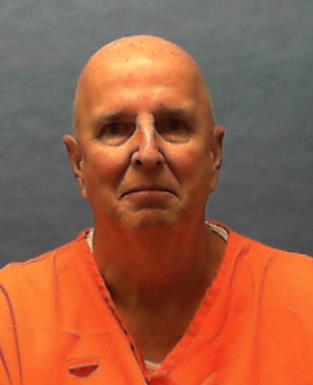
Once physical evidence pointed to his own patrol car, Duckett was formally questioned and processed. He denied, in that questioning, that Teresa had ever sat on the hood of his cruiser — the same denial the fingerprint evidence would later contradict. He was charged with sexual battery of a minor and first-degree murder.
Credit: Jeanne Bragg, via CNN “Death Row Stories” (2014)
Grand jury indictment
Five months after Teresa's death, a Lake County grand jury formally indicted Duckett for her murder.
Wikipedia, “James Aren Duckett”Trial (1988)
A Lake County jury hears the state's circumstantial case.
Trial opens; state seeks death
Duckett stood trial before a Lake County jury on charges of first-degree murder and sexual battery. Prosecutor Steve Hurm presented the tire-track, fingerprint, and hair evidence described above, along with eyewitness testimony that Teresa got into Duckett's patrol car.
Three teenage girls testify to prior conduct
Under Florida's “Williams rule” allowing evidence of similar prior acts, three teenage girls testified that in the months before McAbee's murder, Duckett — while on duty, in his patrol car — had offered them rides and made sexual advances. A 19-year-old and an 18-year-old separately said he'd put a hand on their shoulder or breast and tried to kiss them, desisting when refused; a 17-year-old said they had had oral sex multiple times in his patrol car. On direct appeal, the Florida Supreme Court held the first two incidents were properly admitted as evidence of a common pattern of using his badge and patrol car to isolate underage girls, but that the third witness's account — describing what the court treated as consensual conduct with an older teenager — was not sufficiently similar and should have been excluded. The court found the error harmless given the weight of the remaining evidence.
Duckett v. State, 568 So. 2d 891, 895–96 (Fla. 1990)The precise testimony, and one witness's alibi problem
The court's own opinion is specific: a “petite nineteen-year-old” — Shelby Ann Dow, per the state's own appellate brief, 5'1″ and 92 pounds — testified Duckett, in January or February 1987, drove her around while helping search for her boyfriend and put his hand on her shoulder and tried to kiss her; a “petite eighteen-year-old” per the 1990 opinion — identified in postconviction filings as Linda Upshaw — testified that on May 1, 1987 he picked her up on the highway, drove her to an orange grove, and put his hand on her breast; and a “petite seventeen-year-old” — Kimberly Ruetz, sixteen when the encounters began in December 1986, per the same brief — testified to two occasions of oral sex — the first at a location called “the clay pits,” the second at a different spot she called the “county barn” — each of which she said she initiated voluntarily. Ruetz testified Duckett told her shortly before the murder that the police chief had “gotten on him” for talking to too many girls, and that he had “worked too hard to get where he was” and asked her not to say anything. All three denied any force was used; Duckett denied all three encounters happened at all.
Postconviction counsel argued Upshaw's specific date — Friday, May 1, 1987 — was directly contradicted by Duckett's own timesheet, which the defense says shows he did not work that night; trial counsel testified he had “no tactical nor strategical reason” for never introducing it. A second witness, Peggy Locke, was never called; she would reportedly have testified Upshaw was intoxicated that night, never mentioned any advance from Duckett, and that Duckett had separately told Locke only that Upshaw “was upset and needed a ride home.” This claim does not appear to have been separately and substantively resolved in the opinions reviewed for this document.
Amended Initial Brief, No. SC01-2149 (2002), at 68–69Gwen Gurley testifies
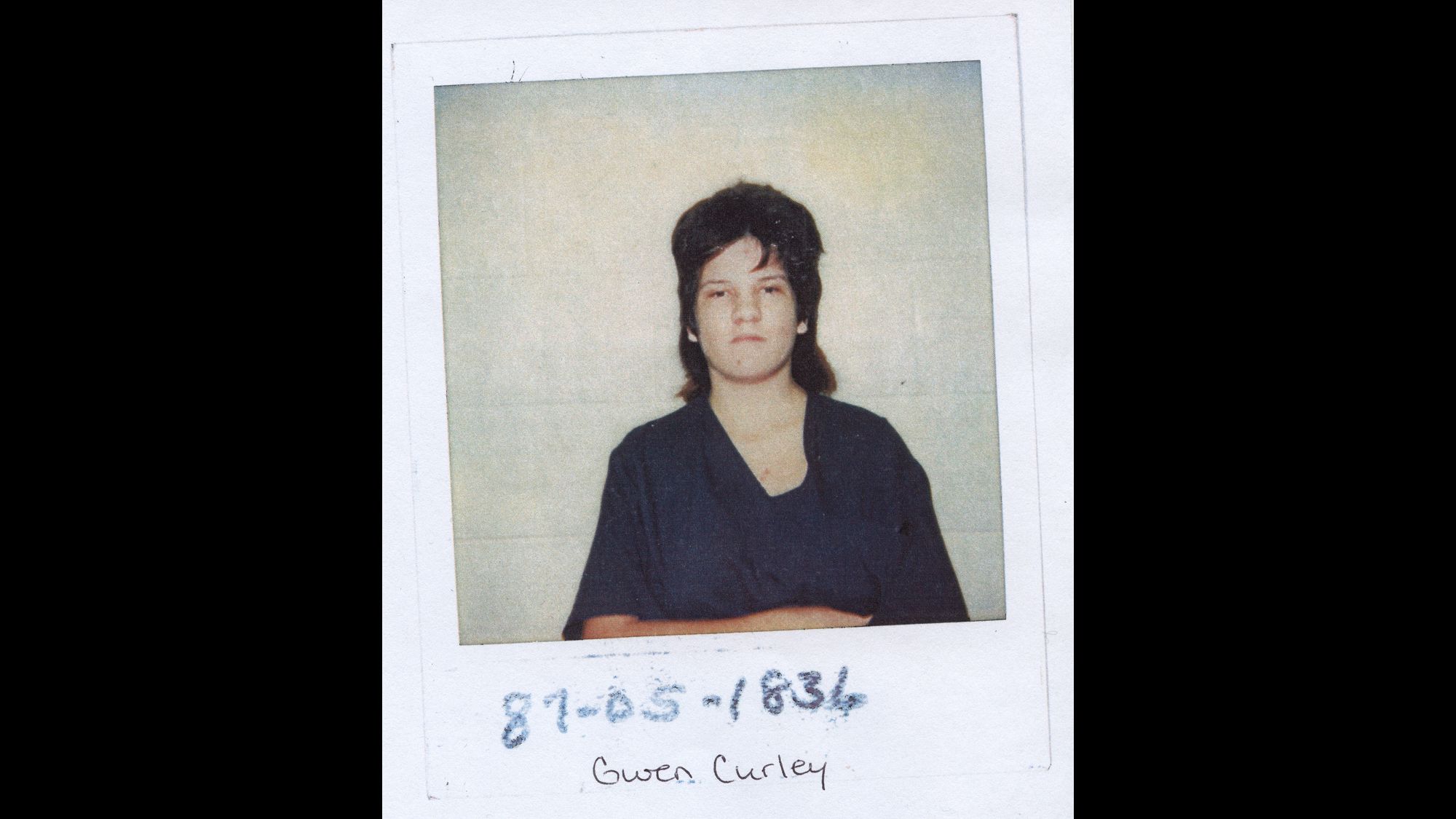
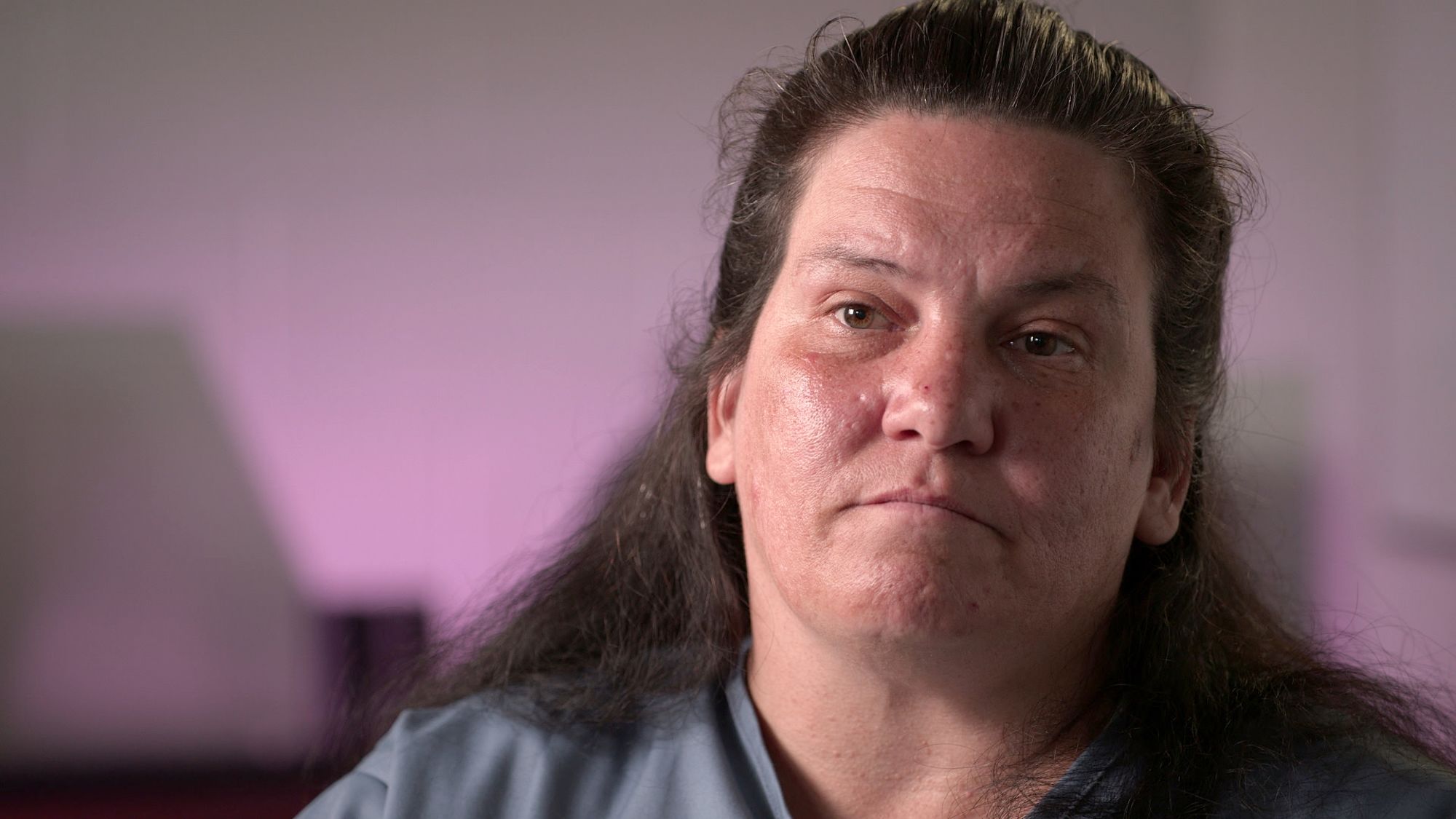
Grace Gwendolyn “Gwen” Gurley — who came forward roughly five months after the murder while incarcerated on unrelated charges — testified that she saw Teresa outside the Circle K that night and watched Duckett drive off with, in her words, “a small person” in his patrol car. She would become the single most litigated witness in the entire 38-year case (Section V).
She never appeared before the jury in person. Because she was in her last trimester of pregnancy, her testimony had been taken on videotape before trial began — the judge, both attorneys, and Duckett himself present, under oath, exactly as at trial — and cross-examined not by lead defense counsel Jack Edmund but by an unnamed associate of his. The tape, not a live witness, is what the jury actually saw; the judge instructed jurors to weigh it “just as though it were live and here in the courtroom.”
Trial Transcript, Vol. IV, at 668–69

Guilty verdict; death recommended 8–4
The jury convicted Duckett of first-degree murder and sexual battery, and on the same day recommended death by an 8–4 advisory vote. Florida's capital-sentencing statute at the time required only a jury majority recommendation, not any particular margin — a bare majority sufficed until Hurst v. Florida (2016) required unanimity (Section V).
Sentenced to death
At sentencing, Duckett took the stand, denied any involvement, and asked the jury — and then the court — to spare his life. Circuit Judge Jerry T. Lockett imposed a death sentence for the murder (then by electric chair) and 25 years to life for the sexual battery, citing two aggravating factors: that the murder occurred during a sexual battery, and that it was especially heinous, atrocious, or cruel.
Appeals & Postconviction, 1990–2019
Nearly three decades, one direct appeal, and six rounds of postconviction litigation — through state court, federal court, and back again.
Direct appeal denied
The Florida Supreme Court unanimously affirmed Duckett's conviction and death sentence, holding the circumstantial evidence — tire tracks, prints, hair, and eyewitness testimony taken together — met Florida's demanding standard that circumstantial evidence must be inconsistent with every reasonable hypothesis of innocence.
Duckett v. State, 568 So. 2d 891 (Fla. 1990) — mandate issued Dec. 17, 1990First postconviction round; DNA testing raised, then narrowed away
Duckett's initial Rule 3.850 motion, filed May 1, 1992, went through evidentiary hearings across 1995, 1997, and 1998 before Circuit Judge Jerry T. Lockett denied all relief on August 10, 2001 — in an order postconviction counsel would later show was copied almost verbatim, typos included, from the state's own proposed order. At oral argument on the appeal in March 2003, both sides told the Florida Supreme Court that clothing in evidence might be testable for DNA; the Court relinquished jurisdiction for that narrow purpose. On remand, the only biological item identified — the Q-6(3) slide, later central to the 2026 litigation — was found too degraded for 2003-era testing, and Duckett's own counsel asked that it not be consumed on a low-probability attempt, preserving it for the technology used in 2026.
Two more claims: a coerced juror, and a hysterical courtroom moment
The same 2002 brief alleged that during deliberations, a holdout juror — described as young, female, and visibly upset — left the jury room, was followed out by the foreman, and returned to change her vote to guilty; Florida's rule barring attorneys from interviewing jurors after trial meant this claim was never developed further. It also alleged the prosecutor carried an autopsy photograph past the victim's mother during closing argument, causing her to become hysterical and run toward a locked courtroom door in front of the jury. Both claims were raised in Duckett's 2002 postconviction appeal; the 2005 opinion held the juror claim barred by Florida's rule against impeaching verdicts with evidence of jury deliberations, and the prosecutorial-misconduct claim procedurally barred because it should have been raised on direct appeal in 1990. Neither was evaluated for whether the underlying events happened as described.
Amended Initial Brief, No. SC01-2149 (2002), at 91–98; Duckett v. State, 918 So. 2d 224, 228 n.7–8 (Fla. 2005)“[T]his 1997 report did not exist when Duckett was tried in 1988 … Duckett fails to establish that the State ‘either willfully or inadvertently’ suppressed the information.” — on the Brady claim tied to Michael Malone's FBI proficiency record
“[E]ven without Gurley's testimony, there was strong circumstantial evidence presented at trial.” — rejecting the claim that Gurley's recantation required a new trial
Ten claims, all denied
The Florida Supreme Court rejected Duckett's consolidated postconviction appeal and habeas petition. It addressed Gurley's recantation directly — she had given six separate statements recanting her trial testimony, alleging investigators coached her on exactly where to stand outside the store and what to say, then invoked her Fifth Amendment right rather than repeat the recantation under oath at a formal hearing. The court found recanted testimony “exceedingly unreliable” on its own, and — critically — held the conviction stood even discounting Gurley entirely, on the strength of the remaining tire-track, print, and hair evidence. The court also rejected an “expert shopping” claim regarding Michael Malone, found trial counsel's penalty-phase strategy adequate, and rejected a Brady claim tied to a 1997 Justice Department report on Malone's conduct in unrelated cases (holding the report post-dated the 1988 trial and was not suppressed).
Duckett v. State, 918 So. 2d 224 (Fla. 2005); cert. denied, 549 U.S. 846 (2006)
Federal habeas denied
U.S. District Judge Wm. Terrell Hodges (M.D. Fla., Ocala Division) denied Duckett's federal habeas petition, which had raised sixteen constitutional claims, including that Gwen Gurley's post-trial recantation — given in two interviews with Duckett's counsel and a private investigator, in which she said she had not actually been at the convenience store that night and that police had told her what to say at trial — amounted to newly discovered evidence warranting a new trial. The court held that claims of actual innocence based on newly discovered evidence have never been held to state an independent ground for federal habeas relief absent an underlying constitutional violation, and found none here; it deferred to the state courts' own finding, after a lengthy evidentiary hearing, that Gurley's recantation was “inconsistent, incredible, and unreliable” and that Duckett would have been convicted even without her trial testimony. “Upon a review of the entire record and the Parties['] written submissions, the Court finds that all of Duckett's claims lack merit. The Petition will be denied in its entirety.” The Eleventh Circuit denied a certificate of appealability that August; the U.S. Supreme Court declined review in 2011.
Duckett v. McDonough, 701 F. Supp. 2d 1245 (M.D. Fla. 2010) — full opinion; cert. denied, 565 U.S. 860 (2011).Four more rounds of successive postconviction litigation, including a full Hurst challenge
Duckett's counsel returned to Florida courts four more times over the following decade. A first successive motion was denied by the circuit court on June 9, 2008 and not appealed. The 2013–14 round (Duckett III) and the 2016–17 round (Duckett IV, Section VIII.4) both pressed claims about the hair evidence; Duckett III additionally argued that Gwen Gurley's own adult children, Brandie and Brandon Campos, had come forward to say their mother told them privately that she lied at trial to get out of jail early, and that Florida's perjury statute had been used to intimidate her out of repeating her recantation under oath at the evidentiary hearing. The Florida Supreme Court's Duckett III opinion (Section XI) resolved the Campos claim on procedural grounds: Duckett's successive motion failed to plead why the Campos siblings' affidavits were not previously available, as Fla. R. Crim. P. 3.851(e)(2)(C)(iv) requires, and the court found the affidavits “substantially similar” to the Gurley recantation evidence it had already rejected in Duckett II. The final round, in 2018, was built entirely around Hurst v. Florida (2016) — the U.S. Supreme Court decision requiring a jury, not a judge, to unanimously find the facts supporting a death sentence, and the Florida Supreme Court's own follow-on decisions extending that to require unanimous jury recommendations. Duckett raised five distinct theories for why Hurst should reach his case despite his 1990 finality date, including a fundamental-fairness argument and a due-process argument that Florida's revised capital-sentencing statute effectively created a new, uncharged crime of “capital first-degree murder.”
Campos claim: Initial Brief, No. SC13-719 (2013), at 16, 24 & n.17“Pursuant to the Florida Supreme Court's decision in Asay, this Court finds this argument is without merit… Defendant's sentence became final in 1990. Thus, under the decision in Asay V, he is not entitled to retroactive application of Hurst v. Florida.”
“Based on the above, this Court finds there is no need to conduct an evidentiary hearing in this case and it is ORDERED and ADJUDGED that the Defendant's Successive Motion to Vacate Judgments of Conviction and Sentence… is DENIED.”
Affirmed, with two justices declining to fully join
The Florida Supreme Court affirmed the circuit court's order in a brief per curiam opinion, holding Hurst did not apply retroactively to a sentence final in 1990. Five justices concurred outright; Chief Justice Canady and Justice Pariente concurred in the result only, without explaining why. Duckett's team — Mary Elizabeth Wells and Brittney Lacy of the Capital Collateral Regional Counsel — then petitioned the U.S. Supreme Court for certiorari in March 2019; it was denied.
Duckett v. State, No. SC18-1190 (Fla. Dec. 28, 2018); cert. petition No. 18-8683 (U.S., filed Mar. 28, 2019)“We have an innocent guy here. This is crazy.”
“I'm 100% confident that when they evaluate this evidence they're going to say, ‘You know what? We got it wrong. We have to give this guy a new trial.’”

The hair evidence is formally discounted — and the conviction still stands
This Court's full opinion was independently obtained and read for this document, not just summarized. Two rounds of federal scrutiny of Michael Malone's hair testimony are addressed: an August 2011 report by an independent FBI-retained analyst (Steve Robertson), and a further 2014 Department of Justice review, summarized in a letter from DOJ Special Counsel Norman Wong to Florida State Attorney Brad King, which found the hair testimony “included [some erroneous] statements that exceeded the limits of science and were, therefore, invalid.” The Court rejected the claim anyway, holding Duckett had not shown Malone's testimony was false “when considered in its full context,” and — independently — that the hair evidence was never the only evidence: “the victim was last seen at the convenience store in Duckett's patrol car, and the unusual tire tracks at the lake where the victim's body was found matched those of Duckett's patrol car… although Duckett had stated that the victim never sat on the hood of his car, ‘[b]oth Duckett's and Teresa's fingerprints were discovered on the hood of Duckett's patrol car’… Duckett's prints were commingled with the victim's, whose prints indicated that she had been sitting backwards on the hood and had scooted up the car.” The opinion also preserves, quoting the 1990 direct-appeal opinion directly, the observation that “no one saw Duckett, the only policeman on duty in Mascotte, from the time he was last seen with the victim until the time he met the victim's mother at the police station.” The Court also rejected companion Brady and Giglio claims and a cumulative-error claim.
Duckett v. State, No. SC16-793 (Fla. Oct. 12, 2017) — PER CURIAM, LABARGA, C.J., and PARIENTE, LEWIS, QUINCE, CANADY, POLSTON, and LAWSON, JJ., concurring. Circuit case Nos. 87-CF-1347(01) & 88-CF-0262, Lake County (William Gray Law, Jr., J.). Appellant represented by Mary Elizabeth Wells and the Capital Collateral Regional Counsel; State represented by Attorney General Pamela Jo Bondi. Full text obtained.The 2026 Death Warrant & Final Litigation
Thirty-eight years after the verdict, DNA testing finally happens — and settles nothing.
Governor DeSantis signs the death warrant
Execution scheduled for the week of March 31, 2026. Duckett was the fifth Florida inmate to have his execution scheduled in 2026, one of three men slated for execution that March alone — an ordinal position in an unusually active warrant year for Florida, not a count of that year's total.
Wikipedia, “James Aren Duckett” — “Duckett was the fifth condemned inmate from Florida to have his execution scheduled in 2026”DNA testing ordered; execution stayed
Lake County Circuit Judge Brian Welke granted defense counsel's request for postconviction DNA testing on a decades-old swab from the victim's underwear, containing a small number of sperm heads. On March 26 the Florida Supreme Court stayed the execution to allow testing to proceed.
Duckett v. State, 428 So. 3d 40 (Fla. 2026)SNP testing completed — and the sample is gone
The 1987 slide (“Q-6(3)”) — too degraded for 2003-era testing, per the Florida Supreme Court's own 2005 opinion — was sent, at the State's insistence over the defense's preference for a Texas lab, to a private Florida laboratory, DNA Labs International (Deerfield Beach), for Single Nucleotide Polymorphism (SNP) testing, a technique suited to small, degraded samples. Testing consumed the entire remaining sample. The lab's Certificate of Analysis reported the profile “indicates at least one male contributor” but was “not suitable for genealogical comparisons or phenotype and ancestry estimations.” Neither the lab nor the Florida Department of Law Enforcement (FDLE) could assign a statistical weight to the male-specific (Y-chromosome) results they did obtain — meaning they could report neither a match nor an exclusion. The state's own Deputy Director of Forensic Sciences recommended further analysis; Attorney General James Uthmeier nonetheless moved to lift the stay, arguing the results “did not exonerate Duckett.” On March 30 the Florida Supreme Court declined to lift the stay and retained concurrent jurisdiction with the circuit court.
Duckett v. State, No. SC2026-0528 (Fla. Apr. 30, 2026), reciting the testing recordA win for Duckett, on a narrow point — and a forceful dissent
With no one able to say what the inconclusive result actually meant statistically, Duckett asked the circuit court to order the underlying testing data released to an independent bioinformaticist, and separately filed public-records demands for the lab's testing process and protocols. The circuit court denied both. On appeal, the Florida Supreme Court reversed in Duckett's favor on the data question, holding that the “results” of court-ordered DNA testing under Florida law must include the underlying data an expert would need to testify to a statistical weight — not merely a bare report calling the test “inconclusive” — and remanded for that data to be released. It separately affirmed denial of the protocols request, agreeing that was sought only for impeachment, not to support a colorable postconviction claim. Justice Tanenbaum dissented at length, arguing the Court had no jurisdiction to hear the appeal at all: the DNA-testing statute was, in his view, a freestanding proceeding unconnected to any pending attack on the death judgment, and by the time of this appeal the testing itself was already complete, making the dispute a closed matter over which only a district court of appeal — not the state Supreme Court — had jurisdiction. He wrote that Duckett was “gaming the process… to delay execution of his sentence, which he has yet to demonstrate is unlawful, despite his having had decades to do so,” using an active death warrant “to manufacture urgency… where none exists.” The majority (Muñiz, C.J., and Labarga, Couriel, Grosshans, Francis, and Sasso, JJ.) held otherwise, and no rehearing was permitted.
Duckett v. State, No. SC2026-0528 (Fla. Apr. 30, 2026). Full text obtained. Circuit case No. 351987CF001347AXXXXX, Lake County (Brian Welke, J.). Appellant represented by Suzanne Keffer, Brittney Lacy, Mary Elizabeth Wells, and Courtney M. Hammer; State represented by Attorney General James Uthmeier.The bioinformaticist's analysis: still inconclusive
Once the underlying data was released under the April 30 ruling, an independent bioinformaticist retained by the defense analyzed it and, per the Florida Supreme Court's subsequent July 8 opinion, likewise could not reach a conclusion either including or excluding Duckett as the source of the male DNA detected. With the biological sample already consumed in the original March testing, no further round of analysis was possible. On July 8, 2026, the Florida Supreme Court affirmed denial of Duckett's fifth successive postconviction motion, denied habeas relief, and lifted the stay of execution.
Duckett v. State, No. SC2026-0449, 2026 WL 1970442 (Fla. July 8, 2026)Second warrant: execution reset for July 28
Governor DeSantis reset Duckett's execution for noon on July 28, 2026 — the same day, six hours apart, as Dominick Occhicone's, marking Florida's first double execution since 1964 and the country's first since Arkansas in 2017. Duckett's lawyers had under two weeks' notice, shorter than any Florida capital defendant in over two decades. His federal cert. petition states that, under the compressed schedule that followed, he became the only capital defendant in Florida, under the state's current death-watch policies, not permitted a final visit with his family on the day of his own execution.
Duckett v. DeSantis, cert. petition (Jul. 27, 2026), at 29 — “Petitioner Duckett is the only capital defendant in Florida under the current death watch policies who will not be permitted a final visit with his family on the day of his execution”Last filings: a sixth postconviction motion, and a constitutional challenge to dying in tandem
Duckett filed a sixth successive postconviction motion arguing the state acted in bad faith by consuming the only remaining biological sample without conclusive results, and a second DNA motion seeking testing of items the state said contained no usable genetic material. The circuit court denied both; the Florida Supreme Court affirmed on July 24, with six justices in the majority — five per curiam (Couriel, C.J., and Muñiz, Grosshans, Francis, and Sasso, JJ.) plus Justice Labarga concurring separately — and Justice Tanenbaum concurring in part and dissenting only in part, on the narrow question of jurisdiction over the second DNA motion. Labarga's concurrence pushed back directly on Tanenbaum, defending capital counsel's “solemn obligation” to keep pressing the courts up to the end against the dissent's characterization of the litigation as frivolous. Separately, Duckett and Occhicone jointly argued in federal court that scheduling both executions six hours apart violated the Eighth Amendment, citing botched double-executions in Oklahoma (2014) and Arkansas (2017). Every court — district, Eleventh Circuit, and finally the U.S. Supreme Court — declined to intervene.
Duckett v. State, SC2026-1083 & SC2026-1084 (Fla. July 24, 2026); Duckett v. DeSantis, No. 26-12595 (11th Cir. July 26, 2026)Execution & Aftermath
July 28, 2026 — and a coda, two days later, in a different case entirely.
Duckett is pronounced dead
James Duckett, 68, was executed by three-drug lethal injection at Florida State Prison near Starke, roughly an hour behind schedule after a last U.S. Supreme Court ruling on the double-execution challenge arrived after noon. He woke at 4:45 a.m., ate a last meal of eggs, grits, bacon, biscuits, and chocolate milk, met with a spiritual adviser, and declined a final statement — answering “No, sir,” when asked. Occhicone was executed five hours later, at 6:13 p.m., making it Florida's first double execution since 1964 and its first by lethal injection — and the first double execution in the U.S. since Arkansas in 2017.

“I waited nearly 40 years to have him dead.” — Dorthy Tula, Teresa McAbee's mother
“This man took advantage of his badge.” — Tracy Mcfall-Buskirk, McAbee's cousin

Polk County names Duckett as Jeanifer Weldon's killer
Sheriff Grady Judd held a press conference announcing that investigators were now confident in naming Duckett as the person responsible for Jeanifer Weldon's 1987 murder, with detectives set to meet with the State Attorney's Office to formally close the 39-year-old cold case. Judd disclosed that detectives had gone to Florida State Prison before the execution and offered Duckett a final opportunity to confess to Weldon's murder; he declined.
FOX 13 Tampa Bay, “Polk sheriff ties James Duckett to 1987 cold case murder” (Jul. 30, 2026); corroborated by WFTV Orlando and Action News Jax (both Jul. 30, 2026)The Evidence, Weighed Individually
Each strand of the state's case, and what thirty-eight years of appellate litigation — and two later documentaries — did to it.
1. Eyewitness testimony that Teresa entered the patrol car
At minimum two witnesses independent of Gwen Gurley — the 16-year-old boy and his uncle — told the same story: they watched Teresa and Duckett get into his patrol car together. Gurley, a third witness who came forward from jail five months later, corroborated it — by pre-recorded videotape rather than live testimony before the jury (Section IV) — then spent two decades recanting under circumstances that make her own testimony genuinely hard to credit either way. Courts consistently found the core fact — Teresa got in the car — did not depend on Gurley alone.

2. Fingerprints and palm prints on the hood
Commingled prints of Duckett and Teresa were found on the hood of his patrol car, in a pattern consistent with her sitting backward on it and scooting toward the windshield — precisely the scenario Duckett denied in his June 15, 1987 statement. This evidence has never been seriously challenged on scientific grounds (unlike the hair) and has never been excluded by any court. Defense counsel did retain a fingerprint expert before trial but chose not to call him, testifying at a postconviction hearing that the expert's report “was not significantly helpful, as a matter of fact, not helpful at all to the Defense” — a strategic decision, not a favorable finding suppressed from the jury.
3. Tire tracks at the lake
Distinctive tread marks near where Teresa's body was found were matched to Duckett's patrol car — a match possible because of just how unusual that tire was: Goodyear Eagle mud-and-snow (winter) tires the local tire center had never once sold in nine years of business, until it received two sets by mistake and mounted them on the department's only two patrol cars. 1980s pattern-matching of tire tread is a softer forensic discipline than DNA, and receives less scrutiny in the record than the hair evidence, but no court ever found it unreliable, and the 2005 opinion records no defense expert or rebuttal testimony directed at the tire-track match specifically; postconviction counsel's ineffective-assistance claim on this point was rejected as conclusory.
4. The pubic hair — the case's weakest link
FBI analyst Michael Malone testified the hair recovered from Teresa's underwear was consistent with Duckett's, calling it a “high degree of probability” match — his exact words, under oath: “I would say that it would be a very high degree of probability that it does. Or to reverse it, I would say the chances of it being from somebody else other than Mr. Duckett would be highly unlikely at best” — and testified it excluded the other men in contact with Teresa that night; per the state's 1990 brief, Malone counted twenty points of similarity where his own methodology required fifteen for a match. He also told the jury that, in his career, hairs he found indistinguishable from one another turned out to be from two different people only “two times out of 10,000” — a specific statistical certainty microscopic hair comparison cannot actually support, and exactly the kind of claim later reviews of his work would fault. At trial, no expert — including one Duckett's own defense sent the hairs to independently — ever contradicted that finding; FDLE's Deborah Steger, who examined the hair first, reached no conclusion either way rather than an exclusion — testifying, notably, as a defense witness called specifically to undercut Malone (Section III). That trial-era record is a separate question from what later scrutiny of Malone found about his broader body of work, discussed next. Malone's work was scrutinized twice on the public record, both rounds fully litigated well before the 2026 warrant, not suppressed: an August 2011 report by an independent analyst retained by the FBI found no written protocols existed for hair analysis until a decade after Malone's work in this case, that his lab notes were poorly documented, and that some of his trial testimony “overstated or exaggerated the accuracy of hair analysis” — though the same analyst found other parts of Malone's testimony correctly stated hair analysis's limits. Duckett's second successive postconviction motion over this report was denied in 2014. A second, broader 2014 Department of Justice review of Malone's work nationwide, summarized in a letter to Florida's State Attorney, concluded the testimony in Duckett's specific case “exceeded the limits of science and w[as], therefore, invalid” — and Duckett's third successive postconviction motion over that finding was denied in 2017 (Section V). Both times, the Florida Supreme Court held Duckett had not shown Malone's testimony was false “when considered in its full context,” and that the hair evidence was never load-bearing on its own. Hair-microscopy comparison is no longer considered scientifically reliable as a means of individualizing a hair to one person by modern forensic standards, even though neither Florida court treated the underlying field as wholly discredited. Notably, three separate Florida Supreme Court panels (2005, 2014, 2017) each held the conviction was independently supported by the tire-track and fingerprint evidence even setting the hair aside entirely — meaning discrediting Malone's testimony, while a real and legitimate criticism of how the case was tried, does not by itself collapse the state's case.
Trial Transcript, Vol. VI, at 1009–11 (Malone testimony)5. DNA testing — twice attempted, twice inconclusive
DNA testing was attempted in 2003 and again in 2026 under the death warrant. In 2003, after the slide was found too degraded and too small in sample size for meaningful testing with then-current technology, Duckett's own counsel informed the circuit court by letter that he did not wish to consume the sample on a low-probability attempt — preserving it for testing that would not become available for another two decades. Both times the biological material was too small or degraded to produce a usable profile. The 2026 sample was entirely consumed in the attempt, foreclosing any future testing. This is the single most consequential open question in the case: modern DNA technology, which has exonerated wrongly convicted people across the country, was never able to either confirm or clear Duckett, and now never can be.
6. Prior-conduct evidence: the three teenagers
Testimony from three teenage girls that Duckett used his patrol car and his badge to isolate and make advances on them in the months before the murder was admitted (in part) under Florida's Williams rule as evidence of a pattern (see Section IV for the appellate court's split ruling on the third witness). It does not prove he killed Teresa McAbee, but it directly rebuts any theory that he had no history of using his position this way.
7. The Weldon and Peterson cases
Neither was ever tried, and neither should be treated as proof of the McAbee murder. But Weldon in particular is no longer merely “suspected”: on July 30, 2026, Polk County's Sheriff formally and publicly named Duckett as her killer based on the accumulated circumstantial case, after decades of investigation and — pointedly — after Duckett declined to speak with detectives about it days before his execution. That is a strong signal about the kind of man investigators, prosecutors, and a sheriff's department were independently convinced he was — from a case built on different evidence, in a different county, years apart. As early as 2003, on a one-to-ten scale, the Polk County chief of criminal investigations put the odds Duckett killed Weldon at “eleven.” Announcing the 2026 closure, Sheriff Judd went further, framing it as an absence of any competing suspect across nearly forty years of investigation: “We never had not one iota of evidence that anyone other than James Duckett ever committed this murder. Never.”
FOX 13 Tampa Bay, “Polk sheriff ties James Duckett to 1987 cold case murder” (Jul. 30, 2026); Lakeland Ledger (Jun. 23, 2003), quoting Maj. W.J. Martin8. A detective's reversal: Marshall Frank
Marshall Frank, a retired Miami-Dade homicide detective and true-crime author, first contacted Duckett around 2003 while researching a book, and in a two-part Miami Herald series that May became a public advocate for the innocence claim, arguing investigators had misread the fingerprint, tire-track, and pubic-hair evidence. The reversal happened fast: within weeks, after Lake and Polk County detectives opened their case files to him and he conducted a death-row interview with Duckett, Frank reversed his position — by his own contemporaneous account to the Lakeland Ledger, published June 23, 2003, he now concluded Duckett was guilty of the McAbee murder and, separately, likely responsible for Jeanifer Weldon's. That reversal, in other words, predates CNN's 2014 “Death Row Stories” by roughly eleven years and Investigation Discovery's 2020 “Killer in Question” by seventeen; both later productions presented Frank as a guilt-holding source, consistent with the position he had already reached in 2003, not as evidence of some later change of mind. He is also the source, elsewhere in this document, of the observation that the “Jiffy Store” notebook entry looked out of chronological sequence (Section III) — a factual observation about the evidence made from that same post-reversal, guilt-holding vantage point, not a holdover from his brief 2003 innocence advocacy. His reversal predates and, on this record, appears independent of Sheriff Judd's 2026 announcement naming Duckett in the Weldon case, though both point the same direction. Frank's changed conclusion cuts against the innocence case from an unusual source: a specific, named investigator who had once made the public argument for Duckett's innocence and abandoned it within weeks. In his own contemporaneous account of the reversal, Frank said what changed his mind was “evidence that Duckett was lying to him, a collapsed alibi and a death row interrogation” — a three-hour, face-to-face prison interview in which, by his account, Duckett was relaxed and laughing on every subject except one: asked about Weldon specifically, Duckett “looked down for about 45 seconds without eye contact.” Frank went further than a change of verdict on the McAbee case alone, telling the Ledger: “I suspect he is a serial killer, somebody who has a compulsive urge to kill and to do it again.”
Investigation Discovery, “Killer in Question,” S1E2 “The Girl in the Lake” (2020) — via MEAWW summary, documents/MEAWW_KillerInQuestion_ep2_summary.html; CNN “Death Row Stories” (2014); “Expert Changes Mind, Says Convict Is Guilty,” Lakeland Ledger (Jun. 23, 2003) — Frank's own contemporaneous account of the reversal, read directly for this document9. Other suspects the defense named — never evaluated on the merits
Duckett's 2002 postconviction brief raised a cluster of alternate-suspect leads that were never presented to the original jury and, per the Florida Supreme Court's 2005 opinion, were also never substantively weighed on appeal — the claims carrying them (grouped by the court as “other unheard evidence” and “unheard corroborating evidence”) were dismissed as “legally insufficient” for pleading reasons, not evaluated for credibility:
- Richard Reynolds's blue-hatchback sighting (Section II) — the single most direct alternate-perpetrator claim in the record, never tested at trial or on appeal.
- Charles and Louie Partain, family acquaintances of Teresa's mother, reportedly seen nervous in the McAbee yard the morning the body was found, driving a blue-green car matching Reynolds's description that was, per a relative's account, never driven in public again; Louie Partain reportedly left the state within days. Neither was ever interviewed by investigators.
- A man known only as “Peoples,” alleged by a relative to have repeatedly grabbed and touched Teresa inappropriately when she stayed with family, who disappeared from the area shortly after the murder and was never fingerprinted, hair-sampled, or interviewed.
- A June 2, 1987 law-enforcement bulletin from Louisiana, addressed to “All Florida,” seeking information on a homicide potentially involving three Mexican men in a 1970s blue-green car near a lake, park, or beach — received by a Lake County investigator before trial but, defense counsel testified, never disclosed to him.
- Salvador Calisto, the 16-year-old present at the initial encounter, was seen by clerk Shirley Williams returning to the Circle K after midnight in an “extremely agitated” state and making a call from the pay phone — a detail from her own postconviction testimony that was never explored at trial.
- Investigator Chuck Johnson testified he independently concluded Duckett was involved within hours of the murder — “the feeling was there” — and postconviction counsel argued that once investigators fixed on Duckett, pursuit of every other lead effectively stopped.
None of this establishes any of these people committed the crime, and none of it has ever survived adversarial testing in a courtroom. But it is a genuine, sourced gap: a body of alternate-suspect evidence exists in the public record that no judge or jury has ever weighed for truth.
Amended Initial Brief, No. SC01-2149 (2002), at 69–75; Duckett v. State, 918 So. 2d 224, 227 n.6 (Fla. 2005) (listing claims 1(g)–(h) as legally insufficient)A Close Reading of Duckett's Own Account
What he said happened, and where it does — and does not — hold up.
The claim
Duckett admits far more than a flat denial. He agrees he approached Teresa and the boy, agrees he had her sit in his patrol car briefly to speak with her privately while he dealt with the boy's uncle, and agrees this is the last time anyone but he himself claims to have seen her. What he specifically denies is everything after that: that Teresa was ever on the hood of the car — though at trial he offered a specific fallback theory, explored fully in Section III, that she might have climbed onto the hot hood herself and jumped back down, a theory raised only after he heard the fingerprint evidence and one that four separate scene witnesses contradicted on cross-examination; that he drove his patrol car to Knight Lake at any point that night; and that he drove off anywhere with her still inside the car. His account is that she got out, he told her to go home, she walked off toward the dumpster, and he drove away alone toward Groveland — consistent, he and his counsel argued, with Shirley Williams's, Kim Vargas's, and Richard Reynolds's separate accounts (Section II), and inconsistent only with Gwen Gurley's. He says he then stopped at the “Jiffy Store” around 10:58–11:00 p.m. and was back at the Circle K for his coffee cup by 11:05–11:15 p.m., before resuming patrol.
Internal logic
Taken purely on its own terms, the story is not incoherent: a lone officer questioning two teenagers loitering near a closed business late at night, sending the younger one home, and continuing a routine patrol that included a stop at another convenience store, is an entirely ordinary night for a small-town cop. Nothing about the shape of the story is inherently implausible. Worth noting for context, though it bears on Duckett's credibility rather than on the murder itself: prosecutor Hogan opened his cross-examination on matters unrelated to the murder — first Duckett's motive for becoming a police officer (“Isn't the real reason you became a police officer because you were laid off from your job at the phosphate company and this was the way you could go to school and still be on welfare?”, Duckett denying it was “welfare” and calling it “unemployment” instead), then, within minutes, his departure from an earlier insurance job — confronting him with an accusation, which Duckett denied under oath and described instead as a repaid workplace shortage, that he had taken $1,398.52 from 136 policyholders. It was never charged as a crime and proves nothing about the McAbee case; it is included here only because it set an unusually adversarial tone for the testimony that followed (Trial Transcript, Vol. IX, at 1712–14).
The specific worry this account invites — that Teresa was abducted by a stranger in the brief window of an extremely short walk — is worth testing with the actual distances involved rather than an impression of them. Teresa's home was just 400 feet from the convenience store — a figure that appears not only in contemporaneous journalism but in the state's own 1990 appellate brief; at an ordinary child's walking pace, that is well under two minutes. On pure timing, this is not as improbable as it may sound: opportunistic abductions of children genuinely do happen in under a minute, and a 20–30 minute gap elapsed before her mother went looking (Section II) — more than enough time, in the abstract, for almost anyone to have intercepted her. Timing alone does not rule a stranger in or out.
What timing cannot explain is which car the physical evidence points to. Teresa's body surfaced somewhere between 2,000 and 3,200 feet from the store — sources disagree on the precise figure, see the citation below — in the opposite direction from home, at a pump house reached only by a specific dirt road, where investigators found tire tracks matching the distinctive tread of Duckett's own patrol car, and where fingerprints of both Duckett and Teresa were found commingled on the hood of that same car (Section III). A stranger who happened to seize Teresa during her walk home would still need, independently, a car with tire tracks matching Duckett's cruiser and an opportunity to put her on the hood of that cruiser specifically — not a generic car, his car. No theory in this record, including Duckett's own, attempts to explain how a stranger's abduction would produce evidence pointing specifically at his vehicle. That is the real problem with the story — not its internal logic, but its collision with everything found afterward, and the fact that the one piece of paper that might have corroborated it was never put in front of a jury.
Worth disclosing: the state made almost exactly this argument to the Florida Supreme Court in 1990, walking through, point by point, what a stranger-abduction hypothesis would require — an unnoticed hood-sitting, a coincidentally identical set of tires, a matching pubic hair, and a mother who searched the whole town without ever spotting the one patrol car in it — before concluding “there is no reasonable hypothesis of innocence that is consistent with all of the evidence.” The analysis above was written independently of that brief and arrives at a version of the same place; readers should weigh that convergence for what it's worth, not more.
Lakeland Ledger (Jun. 23, 2003) — “Teresa walked off toward her home, just 400 feet away” and “a fisherman found the child… near a pump house about 2,000 feet from the convenience store”; State's Answer Brief, No. 72,711 (1990), at 27 — “the victim begins walking home, which is only 400 feet from the store…”; the 400-foot figure is corroborated across an independent news source and a court filing, though neither is a surveyed measurement. The two sources disagree, however, on the store-to-lake distance: this same Answer Brief states elsewhere, in its statement of facts, that “the pumphouse is approximately 3200 feet from the Circle K” (at 6, R 897) — 1,200 feet more than the Ledger's figure. This document could not resolve which is correct and reports both rather than silently preferring one.Where it breaks against the physical record
- The hood. Duckett denied Teresa was ever on the hood of his car. Investigators found both of their prints commingled there, in a pattern consistent with her sitting on it. His trial-testimony explanation — that she might have climbed on and off the hot hood herself while he spoke with Rubio — was contradicted on cross-examination by four other witnesses at the scene (Calisto, Rubio, Reynolds Reitz, and Carr), none of whom saw her on the hood at all.
- The lake. Duckett denied driving to Knight Lake that night. Distinctive tire tracks matching his patrol car were found at the water's edge where her body surfaced. Again, no alternative explanation for how those tracks got there was ever offered by the defense — and on cross-examination he was confronted with his own June 1987 sworn statement swearing he had never been on that road at all “until that morning… when I went over there in my patrol vehicle,” a claim his own trial testimony contradicted by placing him on the same road months earlier, in January, investigating reported gunshots.
- He was never placed at the lake by a witness — only by tire tracks. No person testified to seeing his car there, and his own account offers no innocent explanation for why tracks matching his patrol car's distinctive tires were found at the water's edge.
- Three independent accounts support the “drove off alone” half of his story. Shirley Williams (trial testimony), Kim Vargas (sworn statement, never called), and Richard Reynolds (statement to investigators, never called) each described Duckett leaving the Circle K without Teresa. Reynolds went further, describing Teresa getting into a different car entirely. None of this was tested by cross-examination at trial, and the Vargas/Reynolds claims were later dismissed on postconviction on pleading grounds, not disbelieved on the merits (Section II).
- The Jiffy Store entries are real, on paper, and were never shown to the jury. Duckett's own notebook contains what appears to be a contemporaneous log of the 10:58–11:00 p.m. stop, and Shirley Williams's own testimony (at a 1997 hearing, not at trial) places him back at the Circle K by 11:05–11:15 p.m. His trial attorney never introduced any of this. That attorney died in 2002 without ever fully explaining the decision, though he did testify, generally, that he had not been aware of the notebook before trial.
- Marshall Frank's “out of sequence” observation cuts both ways. It is the only specific, on-record reason to doubt the notebook's reliability — but it comes from a witness (Section VIII.8) whose overall assessment of Duckett later reversed toward guilt, and it is a lay observation about handwriting order, not a forensic document examination. No document examiner's finding on the notebook appears anywhere in the record reviewed for this project.
- A defense timeline expert (Dale Nute) testified post-conviction that the sequence of known events left insufficient time for Duckett to have driven to the lake, committed the crime, and resumed his other logged stops that night. This analysis was never presented to the original jury and, like the notebook and the Reynolds/Vargas accounts, was folded into a postconviction claim the Florida Supreme Court dismissed as “legally insufficient” without reaching whether the timeline itself was accurate.
In plain terms: Duckett's account is internally consistent and, on the question of whether he “drove off alone,” is corroborated by three named witnesses whose accounts were never tested in court. But at its two most specific and physically checkable points — that Teresa was never on the hood, and that he never drove to the lake — it is directly contradicted by evidence that does not depend on any witness's memory, motive, or credibility: commingled fingerprints on the hood, and tire tracks at the water's edge. No version of his account, in any statement or testimony reviewed for this document, offers an alternative explanation for either. A large body of alibi-supporting evidence — the notebook, the Nute timeline, the Reynolds and Vargas sightings — exists in the record but was procedurally dismissed rather than substantively disproven, which is a real and honest gap in this case's history. It does not, however, answer the two physical-evidence questions that matter most.
Assessment
Not a legal finding. Not a scientific one. A reasoned estimate, built from everything above.
Thirty-eight years, one trial jury, one Florida Supreme Court panel on direct appeal, five more on postconviction rounds, a federal district judge, an Eleventh Circuit panel, and the U.S. Supreme Court on five separate occasions all examined this case and none ever found the conviction should fall. That consensus is not proof by itself — wrongful convictions have survived exactly this kind of appellate gauntlet before, and the specific forensic technique most emphasized at trial (hair microscopy) has since been nationally discredited. Both things can be true at once, and the record here supports weighing them honestly rather than deferring to either the courts or the advocates.
- His own denial that Teresa was ever on the hood is directly contradicted by commingled fingerprint evidence — and his account offers no alternative explanation for it.
- His own denial that he drove to the lake is directly contradicted by distinctive tire-track evidence — and his account offers no alternative explanation for it either.
- The state's radio-log gap (10:50 p.m.–12:10 a.m.) is undisputed and appears in every appellate opinion as one of the facts supporting the verdict.
- He was, on every account including his own, the last person known to have seen her alive — and by his own telling, he released her only about 400 feet from home. She never arrived. No witness, in 38 years of litigation, ever places her with anyone else (Section IX).
- He was the only officer on patrol — sole, unsupervised opportunity in the relevant window.
- Despite an active, hours-long search that night, Teresa's mother never once saw his patrol car; he never checked back with her after 3 a.m.; and when specifically asked by Teresa's aunt whether he'd checked the lake near where the body was ultimately found, he never went — the aunt had to check it herself (State's Answer Brief, 1990, at 20–22; Section II).
- Under oath at trial, Duckett confirmed he spent roughly the last hour of his shift — while Teresa was still missing — sitting stationary, running radar and writing tickets, rather than searching; the prosecutor asked him directly, “Isn't it true, Officer Duckett, that the reason you weren't looking for her is because you knew where she was?” He denied it, but did not otherwise explain the hour (Trial Transcript, Vol. IX, at 1743–45).
- Demonstrated prior pattern: three teenagers describe him using his patrol car and badge to isolate and pursue them, including one instance of repeated oral sex he denied under oath.
- A second, independently-investigated case (Weldon) with its own strong circumstantial evidence — publicly closed against him by name, by a different county's Sheriff, using different evidence, decades later.
- Retired homicide detective Marshall Frank, once the case's most prominent innocence advocate, reversed his own conclusion to guilt after years of further investigation.
- DNA testing, twice attempted with modern technology specifically to clear him if he were innocent, never did.
- No confession, ever, across 38 years, including at the moment of execution.
- Three independent witnesses (Williams, Vargas, Reynolds) support the “drove off alone” core of his account; Reynolds specifically described Teresa entering a different car with a different man. None was cross-examined at trial, and the postconviction claims built on Vargas's and Reynolds's accounts were dismissed on pleading grounds, not disbelieved on their merits.
- The hair evidence — heavily emphasized at trial — came from an analyst later found to have systematically overstated forensic certainty nationwide, and the state's own crime lab could not reach a match before the FBI was brought in.
- A key corroborating witness (Gurley) recanted repeatedly, alleging coaching, and the process by which the state disclosed (or delayed disclosing) concerns about its own forensic witness raises legitimate fair-process questions, even where courts found no legal violation. Her own adult children later said, in a 2013 postconviction claim, that she privately told them she lied at trial to get out of jail early — a claim this document could not confirm the resolution of, since the opinion deciding it is unreadable (Section V).
- His own notebook and a defense timeline expert's analysis, if genuine and accurate, would corroborate his account of insufficient time to commit the crime — but neither was tested at trial, and both were later dismissed on postconviction as “legally insufficient,” a pleading ruling that never reached whether they were true.
- A named alternate-suspect trail (the Partain brothers, “Peoples,” a Louisiana bulletin about three men in a matching car) exists in the public record and has never been investigated or tested in any courtroom.
- DNA evidence never affirmatively included him either — it was consumed before science could resolve the question either way.
- The jury's 8–4 death recommendation would not meet Florida's own current unanimity standard for any defendant sentenced today, and a postconviction claim that a holdout juror was pressured into changing her vote was never heard on the merits because Florida bars attorneys from interviewing jurors after trial.
- A trial judge, a police chief, and a mayor who knew Duckett professionally, along with (for a time) Marshall Frank, publicly believed him innocent of the McAbee murder specifically.
This is an analytical estimate drawn from the public record above — not a legal, statistical, or scientific determination, and not a substitute for a conclusive DNA result, which testing never produced: declined as unlikely to succeed in 2003, then completed but inconclusive in 2026, consuming the last of the sample and foreclosing any future attempt.
Why roughly 85, and not higher or lower: This case is built entirely on circumstantial evidence, and a wider swath of it is genuinely contested than a first pass suggests. The hair comparison rests on since-discredited science from an analyst with a documented history of overstating certainty. Three named witnesses — not one — support the least-contested part of Duckett's account, and one of them (Reynolds) describes an alternate scenario entirely. A defense timeline expert's analysis and Duckett's own patrol notebook, if genuine, bear directly on whether he had time to commit the crime at all. And a cluster of named alternate suspects (the Partain brothers, “Peoples,” the Louisiana bulletin) was never investigated by police and never tested in court. Crucially, none of this evidence was rejected by a court after being weighed — it was procedurally dismissed on pleading grounds, mostly in the 2005 postconviction opinion, without any judge ever ruling on whether it was true. That is a real and specific limitation of this case's record, not just generic appellate-process skepticism.
Set against all of that: the two pieces of evidence that matter most were never explained away by any version of Duckett's account, tested or untested. They are the fingerprints commingled on the hood and the tire tracks at the lake — physical evidence, gathered independently of any witness, that directly falsifies the two most specific and checkable claims in Duckett's own denial. No brief, no hearing, no expert Duckett's own attorneys retained ever offered an alternative account of how his fingerprints came to be on that hood in that pattern, or how tracks matching his unusual patrol tires came to be at that lake. An innocent man's alibi being wrong about small or ambiguous details is common and unremarkable. An innocent man's denial being contradicted, point for point, by physical traces at the exact two locations he specifically denied being — the hood, the lake — with no proposed explanation ever offered for either, is a much harder coincidence to credit. Layered on top of that: a documented pattern of similar conduct with other teenagers, an undisputed ninety-minute radio-silent gap in the disappearance window, a second case investigated independently by a different agency decades later using different evidence that reached the same conclusion about him, and a former innocence advocate (Frank) who reversed himself after digging deeper. None of that is a confession, and none of it is DNA.
What would move this estimate meaningfully lower: a completed, conclusive DNA exclusion — now permanently impossible, since the only remaining sample was consumed in 2026 testing that failed to produce one; a substantive, merits-based hearing on the Reynolds/Vargas/Partain/Peoples evidence, which has never happened; or forensic document analysis of the notebook establishing the “Jiffy Store” entries were contemporaneous and genuine, which was never performed. What would move it higher: any explanation, ever offered by Duckett or his counsel, for the hood prints or the tire tracks. None has been. Those open questions — not the appellate courts' repeated affirmances, and not the advocacy on either side — are the real unresolved center of this case.
Sources
Every document and photograph below was downloaded during research for this file — court opinions and filings in \documents, images in \images.
Primary court & government documents
| Citation | Court | Date | File |
|---|---|---|---|
| Trial Transcript, Case No. 35-1987-CF-001347-AXXX-XX (jury trial & related hearings) | Circuit Court, Lake County (trial court) | Dec. 18, 1987 – Jun. 30, 1988 | Vol. I — Jury Trial, Apr. 25–May 10, 1988 Vol. II — Jury Trial Vol. III — Jury Trial Vol. IV — Jury Trial Vol. V — Jury Trial Vol. VI — Jury Trial Vol. VII — Jury Trial Vol. VIII — Jury Trial Vol. IX — Jury Trial Vol. X — Jury Trial Vol. XI — Jury Trial Hearing, Apr. 19, 1988 Hearing, Apr. 22, 1988 Hearing, Dec. 18, 1987 Sentencing, Jun. 30, 1988 |
| Duckett v. State (Duckett I), 568 So. 2d 891, No. 72,711 | Fla. Supreme Court (direct appeal) | Sep. 6, 1990 | 1990_FLSupCt_op-72711_OPINION.pdf — full text obtained from the Florida Supreme Court's own archive (via FSU Law Digital Collections) and read directly. |
| Duckett's Amended Brief & State's Answer Brief, No. 72,711 | Fla. Supreme Court (direct appeal) | 1988–90 | 1990_SC72711_SupplementToAmendedBrief.pdf 1990_SC72711_AnswerBrief.pdf |
| Duckett v. State, SC01-2149 & SC02-1300 — Amended Initial Brief of Appellant | Fla. Supreme Court (postconviction appeal + habeas petition) | Jun. 4, 2002 | 2002_SC01-2149_AmendedInitialBrief.pdf — full text obtained and read directly; the single richest primary source used in this document (113 pages; author M. Elizabeth Wells). |
| Reply Brief & Habeas Petition/Reply/Response, SC01-2149 & SC02-1300 | Fla. Supreme Court | 2002 | 2002_SC01-2149_ReplyBrief.pdf 2002_SC02-1300_HabeasPetition.pdf 2002_SC02-1300_HabeasReply.pdf 2002_SC02-1300_HabeasResponse.pdf |
| Answer Brief of Appellee, SC01-2149 | Fla. Supreme Court | 2002 | 2001_FLSupCt_SC01-2149_answer_brief.pdf AnswerBrief_SC01-2149_from_flcourts.pdf |
| Duckett v. State (Duckett II), 918 So. 2d 224, Nos. SC01-2149 & SC02-1300 | Fla. Supreme Court (postconviction + habeas) | Oct. 6, 2005 | 2005_FLSupCt_op-sc01-2149_OPINION.pdf — full text obtained from the Florida Supreme Court's own archive and read directly. |
| Duckett v. McDonough, 701 F. Supp. 2d 1245 | U.S. District Court, M.D. Fla. | Mar. 25, 2010 | Duckett v. McDonough, 701 F. Supp. 2d 1245.pdf — full text obtained and read directly for this document; docket metadata also on file (raw_api_search.json) |
| Initial, Answer & Reply Briefs, No. SC13-719 | Fla. Supreme Court | 2013–14 | 2013_SC13-719_InitialBrief.pdf 2013_SC13-719_AnswerBrief.pdf 2013_SC13-719_ReplyBrief.pdf |
| Duckett v. State (Duckett III), 148 So. 3d 1163 / SC13-719 | Fla. Supreme Court | Jun. 26, 2014 | Duckett v. State (Duckett III), 148 So. 3d 1163 - SC13-719.pdf — full text obtained and read directly for this document. |
| Duckett v. State (Duckett IV), No. SC16-793 | Fla. Supreme Court | Oct. 12, 2017 | 2016_FLSupCt_SC16-793_opinion.pdf — full text obtained and read directly for this document. |
| Duckett v. State cert. petition, No. 17-8388 | U.S. Supreme Court | May 21, 2018 | 2018-05-21_SCOTUS_cert_petition.pdf |
| Order on Defendant's Successive Motion (Hurst claims), Case Nos. 87-CF-1347(01) & 88-CF-0262 | Lake County Circuit Court (William Gray Law, Jr., J.) | Jun. 18, 2018 | Included within 2019_SCOTUS_CertAppendix_18-8683_incl_2018CircuitCourtOrder.pdf, Appendix A — a genuine signed, file-stamped circuit court order, not an appellate opinion. |
| Duckett v. State, No. SC18-1190, & cert. petition No. 18-8683 | Fla. Supreme Court; U.S. Supreme Court | Dec. 28, 2018; Mar. 28, 2019 | Same file — 2019_SCOTUS_CertAppendix_18-8683_incl_2018CircuitCourtOrder.pdf, Appendix B (opinion) and cover pages (cert. petition) |
| Initial, Answer & Reply Briefs on the Merits, No. SC2026-0528 | Fla. Supreme Court | 2026 | 2026_SC26-0528_InitialBrief.pdf 2026_SC26-0528_AnswerBrief.pdf 2026_SC26-0528_ReplyBrief.pdf |
| Duckett v. State, No. SC2026-0528 | Fla. Supreme Court (DNA data-access appeal) | Apr. 30, 2026 | 2026-04-30_FLSupCt_SC2026-0528_opinion.pdf — full text obtained, including Justice Tanenbaum's dissent on jurisdiction. |
| Duckett v. State, No. SC2026-0449, 2026 WL 1970442 | Fla. Supreme Court | Jul. 8, 2026 | 2026-07-08_FLSupCt_SC2026-0449_final_opinion.pdf |
| Duckett v. State, SC2026-1083 & -1084 (6th successive postconviction / DNA) | Fla. Supreme Court | Jul. 24, 2026 | Duckett v. State, SC2026-1083 & -1084 (6th successive postconviction - DNA).pdf — full text obtained and read directly for this document. |
| Duckett v. DeSantis — cert. petition (double-execution Eighth Amendment challenge) | U.S. Supreme Court | Jul. 27, 2026 | 2026-07-27_SCOTUS_cert_petition.pdf |
| Appendix Volume I to the above cert. petition | U.S. Supreme Court | Jul. 25, 2026 | 2026-07-25_SCOTUS_Appendix_Vol_I.pdf |
| Florida Legislature, Commission on Capital Cases — official case file, DC# 112232 | Florida Legislature | ongoing | FLLeg_CommissionCapitalCases_112232.html |
| Office of the State Attorney, 5th Judicial Circuit — statement on the execution | State Attorney's Office (Bill Gladson) | Jul. 28, 2026 | SAO5_Gladson_ExecutionStatement.html |
Also on file: docket index pages listing every filing in the SC01-2149/SC02-1300, SC13-719, and SC26-0528 dockets (SC01-2149_docket_index.html, SC13-719_docket_index.html, SC26-0528_docket_index.html, 72711_docket_index.html), all retrieved from the Florida Supreme Court's own FSU-hosted archive of briefs and opinions — a genuine primary-source repository, not a secondary aggregator. Two documents listed in that archive's own index (a Supplemental Initial Brief and Supplemental Answer Brief in SC01-2149) returned broken links and could not be retrieved. The underlying circuit-court postconviction order the 2017 opinion reviews (Duckett v. State, Nos. 87-CF-1347(01) & 88-CF-0262 (Fla. 5th Cir. Ct. Apr. 1, 2016)) is quoted in that opinion but was not separately located as a standalone filing.
Secondary reporting, documentaries & advocacy sources
| Source | Subject | File |
|---|---|---|
| PBS NewsHour | Execution report, Jul. 28, 2026 | PBS_2026-07-28_execution_report.html |
| CNN | Double-execution coverage, Jul. 26, 2026 | CNN_2026-07-26_double_execution.html |
| CNN “Death Row Stories,” S1E4 “Killer Cop” (2014) | 13-photo case gallery with captions — source for most archival photographs in this document | CNN_gallery_page_raw.html CNN_gallery_captions_and_credits.txt images 00–12 series |
| Investigation Discovery, “Killer in Question,” S1E2 “The Girl in the Lake” (2020) | Detective Marshall Frank's investigation and reversal | MEAWW_KillerInQuestion_ep2_summary.html |
| Fox News | DNA-testing stay coverage, Mar. 31, 2026 | FoxNews_2026-03-31_DNA_stay_execution.html |
| Death Penalty Information Center | Innocence concerns, Jul. 20, 2026 | DPIC_2026-07-20_innocence_concerns.html |
| Floridians for Alternatives to the Death Penalty | “A Case Marked by Unanswered Questions” | FADP_Duckett_unanswered_questions.html |
| Tampa Free Press | DNA case summary, Jul. 1, 2026 | TampaFreePress_2026-07-01_DNA_case_summary.html |
| The Cinemaholic | Case & status summary | TheCinemaholic_Where_is_Duckett_now.html |
| Wikipedia | “James Aren Duckett” — used as a sourced index, cross-checked against primary opinions above | Wikipedia_James_Aren_Duckett.html |
| Lakeland Ledger (Edna Buchanan) | “Expert Changes Mind, Says Convict Is Guilty” — Marshall Frank's reversal, in his own words; source of the “400 feet” distance figure discussed in Section IX | TheLedger_2003-06-23_Expert_Changes_Mind.html — full text obtained and read directly for this audit (Wikipedia's cited source, independently re-fetched) |
| Orlando Sentinel | “Killer Seen as Suspect in Polk Girl's '87 Death” — original 2003 reporting on the Weldon gas-receipt evidence | OrlandoSentinel_2003-06-26_Killer_Seen_As_Suspect.html — full text obtained and read directly (Wikipedia's cited source, independently re-fetched) |
| FOX 13 Tampa Bay | Sheriff Judd's Jul. 30, 2026 press conference naming Duckett in the Weldon case | FOX13_2026-07-30_Weldon_cold_case_link.html |
| WFTV Orlando | Same press conference, independent write-up | WFTV_2026-07-30_Weldon_cold_case_link.html |
| Action News Jax | Same press conference, independent write-up, consistent with the FOX 13 account relied on for this section | ActionNewsJax_2026-07-30_Weldon_cold_case_EXTRACTED_TEXT.txt |
Images
| Description | File | Included above? |
|---|---|---|
| Teresa McAbee, childhood family photograph | Teresa_McAbee_photo.jpg | Yes |
| Crime-scene location: pump house & dirt road, Mascotte | 00_Lead_pump_house_crime_scene.jpg | Yes |
| Tire-tread comparison evidence photographs | 03_Tire_tracks_evidence.jpg | Yes |
| Duckett's patrol notebook, “Jiffy Store” page (image filename retains “JiffyStop” as downloaded) | Duckett_notebook_JiffyStop_page.jpg | Yes |
| Duckett's patrol car, impounded for evidence | LCSO_patrol_car_photo.jpg | Yes |
| Duckett being fingerprinted/processed as a suspect | Fingerprint_evidence_Duckett.jpg | Yes |
| Gwen Gurley, 1987 booking photograph | Gwen_Gurley_evidence_photo.jpg | Yes |
| Gwen Gurley, 2014 documentary interview | Gwen_Gurley_portrait.jpg | Yes |
| Duckett in court, 1988 | Courtroom_photo_Duckett.jpg | Yes |
| Duckett, death-row interview, later years | James_Duckett_portrait.jpg | Yes |
| Dorothy McAbee, 2014 documentary interview | Dorothy_McAbee_mother.jpg | Yes |
| Beth Wells, appellate attorney, 2014 interview | Beth_Wells.jpg | Yes |
| Duckett, 1987 booking / death-row photographs (additional) | Duckett_wikipedia_infobox.jpg Duckett_death_row_mugshot.jpg | No (archived only) |
| Original crime-scene photograph, Knight Lake (body recovery) | StateAttorney_evidence_09.jpg 02_Crime_scene_Knight_Lake.jpg | No — deliberately withheld, see Section VII |